
One of the biggest questions many young couples, first-time renters, and people starting life on their own eventually face is simple:
Should you keep renting or buy a home with a mortgage?
There isn’t one correct answer. The right choice depends on your income, future plans, savings, and lifestyle.
If you’ve been going back and forth for weeks, there’s an interesting decision-making trick that may help. Benjamin Franklin famously recommended making a simple list of pros and cons before making important life decisions.
At AdmiGram.com, we think it’s still one of the smartest ways to organize your thoughts.
Grab a piece of paper and divide it into two columns: Renting and Buying With a Mortgage. Then split each column into Pros and Cons. Whether you’re making the decision alone or with your partner, writing everything down often makes the answer much clearer.
Housing: Mortgage or Renting — What to Choose?
Start With Your Financial Reality

© Anthony Tran / Unsplash
Before comparing mortgages and rent, take an honest look at your current situation.
If your job isn’t stable, you’re planning to change careers, or there’s a good chance you’ll move to another city in the next few years, renting usually makes more sense. It gives you flexibility and doesn’t lock you into one location.
If your income is steady, you’re planning to start a family, or you’re looking for a long-term place to call home, buying may be the better investment.
Of course, a mortgage isn’t cheap. Over the life of the loan, you’ll almost always pay much more than the home’s original price because of interest. That’s why it’s important to make sure your budget can comfortably handle the monthly payments.
Sometimes waiting another year or two to build your savings or increase your down payment is the smartest financial move.
The truth is that there’s no universal winner. In some cities, renting costs far less than owning. In others, monthly mortgage payments may be surprisingly close to rent. It all depends on your personal circumstances.
Let’s look at the biggest advantages and disadvantages of each option.
Renting a Home: Pros and Cons

© HiveBoxx / Unsplash
Pros:
- Lower upfront costs than buying a home.
- Easy to move if you change jobs or decide to relocate.
- No long-term debt or mortgage payments.
- You’re not responsible for many major repairs, which are often covered by the landlord.
Cons:
- Rent usually increases over time.
- The landlord may decide not to renew your lease.
- You often can’t remodel, paint, or make major changes.
- Many rentals have restrictions on pets or other personal choices.
- Monthly rent builds someone else’s equity — not yours.
Renting is usually the better option if you’re still figuring out where you want to settle down or aren’t financially ready to buy.
Buying With a Mortgage: Pros and Cons

© Roselyn Tirado / Unsplash
Pros:
- Every payment helps build ownership in your home.
- You have the freedom to renovate, decorate, and customize your space.
- Your monthly mortgage payment is often more predictable than rising rent (if you have a fixed-rate loan).
- Your home may increase in value over time.
- Once the mortgage is paid off, the home is yours.
Cons:
- Buying requires a down payment and closing costs.
- Monthly payments are usually higher than rent in many markets.
- You’ll pay interest, making the home cost more over time.
- Homeowners are responsible for repairs, maintenance, property taxes, and insurance.
- Missing mortgage payments could eventually lead to foreclosure.
So… Which One Should You Choose?
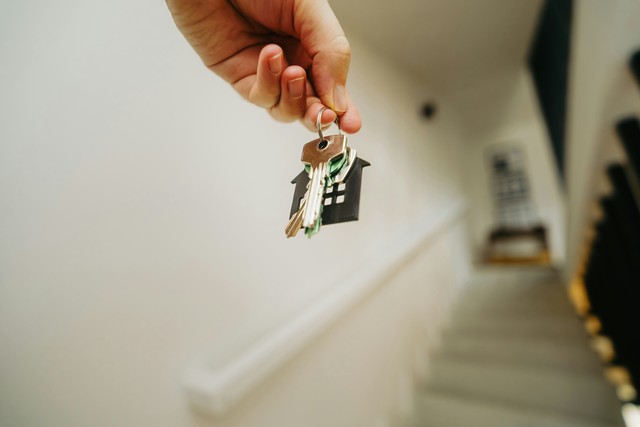
© Jakub Żerdzicki / Unsplash
If you value flexibility, expect major life changes, or aren’t financially prepared for homeownership, renting is probably the smarter choice.
If you’re planning to stay in one place for years, have stable income, and are ready for the responsibilities of owning a home, buying with a mortgage can become one of the best long-term investments you’ll ever make.
At the end of the day, the right answer isn’t the same for everyone. But if you carefully compare the pros and cons — and make sure the numbers fit your budget — you’ll be much more confident that you’re making the decision that’s right for your future.
image on top: Jonathan Hanna / Unsplash


