Our world is full of strange, beautiful, and fascinating traditions. One of the best ways to discover them is by looking at how people in different countries celebrate.
Some festivals are so unique that there is simply nothing quite like them anywhere else. Others are so unusual that you might wonder whether the people taking part are from another planet.
But once you stop looking at the world through the lens of your own culture, things get a lot more interesting.
At AdmiGram.com, we’ve rounded up some of the most unusual festivals around the world — celebrations that bring people together, create unforgettable memories, and prove that there’s no single way to have fun.
The Most Unusual Festivals Around the World
Cooper’s Hill Cheese-Rolling — England
View this post on Instagram
Every spring, thousands of thrill-seekers gather on Cooper’s Hill near Gloucester, England, for one of the world’s strangest competitions.
The rules are incredibly simple: a round wheel of cheese is sent rolling down the hill, and everyone races after it.
Sounds easy, right? Not exactly.
The cheese can reach speeds of around 40 mph (about 64 km/h), while the hill is steep enough to make staying on your feet a serious challenge. People have been known to tumble, slide, and crash their way down the slope in pursuit of the prize.
View this post on Instagram
The tradition has been around for more than 200 years, although nobody knows exactly how it started. One popular theory connects it to an old pagan tradition of rolling burning bundles of brushwood down a hill to celebrate the beginning of a new year.
Over the years, officials have raised concerns about injuries and safety, but that hasn’t stopped fans from showing up year after year.
Apparently, a wheel of cheese is a powerful motivator.
Bloemencorso — Netherlands
View this post on Instagram
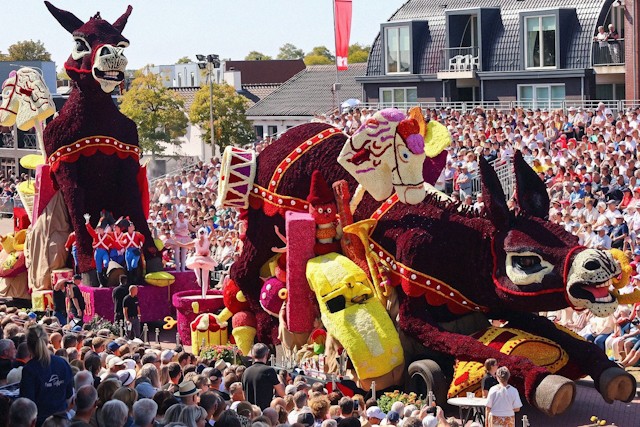
If you’re looking for a festival that’s the complete opposite of cheese rolling, look no further than the Dutch Flower Parade.
Known as Bloemencorso, this spectacular event is filled with enormous flower-covered floats, beautifully decorated cars, music, dancing, and incredible colors and scents.
The parade travels about 26 miles (roughly 42 km) from Noordwijk to Haarlem. Along the route, more than a million spectators gather to watch the giant floral creations go by.
The floats feature enormous figures and elaborate designs made almost entirely from flowers.
View this post on Instagram
It’s one of the most famous flower parades in the world, and the celebration doesn’t end with the main event. Flower-themed activities and parades continue in different parts of the country for days afterward.
Building the floats takes months of work from hundreds of volunteers, and millions of flowers — mainly hyacinths, tulips, and daffodils — go into the displays.
It’s basically spring turned into a parade.
Holi — India
View this post on Instagram
Holi is one of India’s most colorful and joyful celebrations. Often called the Festival of Colors, it marks the arrival of spring and is celebrated around the full moon in late February or March.
The festival has deep religious and cultural roots, with several legends connected to its origins. One of the best-known stories involves Holika, a demoness who was believed to be immune to fire.
According to the legend, Holika tried to use her protection from fire to destroy Prahlada, a young devotee of the god Vishnu. Instead, Holika was burned while Prahlada survived.
That’s why bonfires are traditionally lit on the night before Holi, symbolizing the victory of good over evil.
View this post on Instagram
Then comes the really colorful part.
The next morning, streets fill with people throwing brightly colored powders, spraying water, singing, dancing, and celebrating together.
For a while, everyday social boundaries are set aside, and people from different backgrounds come together to celebrate.
It’s messy, loud, colorful — and incredibly fun.
La Tomatina — Spain
View this post on Instagram
Imagine an entire town covered in tomato juice.
That’s La Tomatina.
Every year on the last Wednesday of August, the Spanish town of Buñol hosts one of the world’s biggest food fights.
The festival attracts people from all over Spain and around the world. There’s music, dancing, fireworks, street parties, and plenty of tomatoes.
According to the most popular story, the tradition began with a spontaneous food fight in the 1940s during a local festival. People grabbed tomatoes from nearby market stalls and started throwing them at each other.
View this post on Instagram
The tradition was banned several times, but it proved impossible to kill.
Today, tons of tomatoes are brought into the town for the event. Once the signal sounds, the battle begins.
For about an hour, participants throw tomatoes at friends, strangers, and anyone else unlucky enough to get within range.
By the end, the streets can look like red rivers of tomato juice.
There’s really just one rule: tomatoes are all you’re allowed to throw — and crushing them before throwing is encouraged to reduce the chance of injuries.
Diwali — India
View this post on Instagram
Diwali, also known as Deepavali, is one of India’s most important and widely celebrated festivals.
Known as the Festival of Lights, Diwali symbolizes the victory of light over darkness and good over evil. It usually takes place between October and November and lasts for several days.
During the festival, homes and streets glow with thousands of small oil lamps called diyas. Families decorate their houses, wear new clothes, exchange gifts, enjoy special foods, and watch spectacular fireworks.
Many people also light lamps to welcome Lakshmi, the goddess associated with wealth and prosperity.
View this post on Instagram
Diwali is sometimes compared to Christmas and New Year’s in the West because of the family gatherings, decorations, gifts, and festive meals that come with it.
But Diwali also has a deeper spiritual meaning. Traditionally, the holiday is a time for reflection and for letting go of negative qualities such as anger, greed, lust, excessive attachment, and ego.
In other words, it’s not just about making the world around you brighter.
It’s also about trying to make your own thoughts, words, and actions a little brighter, too.
image on top: Erwin Martens / Wikimedia Commons