The ocean covers about 70% of our planet, and let’s be honest — we still know surprisingly little about it. In some ways, we know more about the surface of Mars than we do about the world beneath the waves.
While you’re peacefully snorkeling near the surface, an entire world of strange and dangerous creatures is living below you. And some of them are definitely not creatures you’d want to meet while taking a swim.
At AdmiGram.com, we’ve picked 10 ocean animals that are best admired from a very safe distance.
Seriously, folks — these are not the kind of beach encounters you want to have.
10 Ocean Creatures You’d Rather Not Meet at the Beach
10. Barracuda
View this post on Instagram
This “sea pike” can grow to nearly 6 feet (1.8 m) long and has a mouth full of razor-sharp teeth.
Barracudas don’t normally hunt humans, but they do have a weakness for shiny objects. A necklace, ring, or metal watch can sometimes catch their attention and be mistaken for the flash of a small fish.
A curious barracuda can move incredibly fast, and a bite can cause serious, deep wounds and heavy bleeding.
So if you’re snorkeling in barracuda territory, maybe leave the jewelry at the hotel.
9. Moray Eel
View this post on Instagram
With its long body and permanent-looking toothy grin, a moray eel can look like something straight out of a nightmare.
Most morays attack only when they feel threatened. The biggest mistake a diver can make is sticking a hand into a hole where one is hiding.
Their jaws are powerful, and their bites can cause serious injuries. There’s also a high risk of infection because of the bacteria commonly found in their mouths.
In other words, admire the eel, but don’t try to shake its hand.
8. Portuguese Man o’ War
View this post on Instagram
At first glance, this bright blue creature floating on the waves might look almost harmless.
It isn’t.
The Portuguese man o’ war is a colony of specialized organisms working together as one. Its long tentacles can stretch dozens of feet (9+ meters) through the water, and touching them can cause extremely painful stings and severe skin reactions.
For people with serious allergies, a sting can become a medical emergency.
And the worst part? You may not even see the tentacles before you touch them.
7. Lionfish
View this post on Instagram
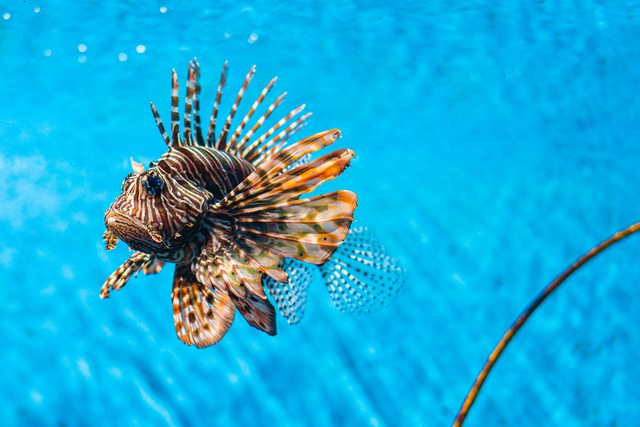
The lionfish is one of the most beautiful creatures in the ocean. With its dramatic, fan-like fins, it looks almost like an underwater flower.
Unfortunately, those beautiful fins come with a warning.
The spines contain venom that can cause intense pain, swelling, nausea, and other symptoms. An accidental encounter while swimming or snorkeling can turn a relaxing day at the beach into a trip to the emergency room.
It’s gorgeous. It’s fascinating. And it’s definitely not something you want to touch.
6. Cone Snail
View this post on Instagram
Here’s a simple rule worth remembering: don’t pick up beautiful shells on a reef.
A cone snail may look like an ordinary, colorful shell, but the living animal inside can deliver venom through a tiny harpoon-like tooth.
Some species produce extremely powerful toxins that can interfere with the nervous system and cause paralysis. There is no simple antidote, so treatment focuses on keeping the victim alive and supporting breathing while the venom wears off.
That pretty shell on the ocean floor? Just leave it where it is.
5. Blue-Ringed Octopus
View this post on Instagram
This tiny octopus is about the size of a golf ball and looks almost harmless — until those brilliant blue rings appear.
Those glowing rings are a serious warning.
Blue-ringed octopuses can deliver venom containing tetrodotoxin, a powerful neurotoxin that can cause paralysis and respiratory failure. One bite can become life-threatening very quickly.
And here’s the frightening part: the bite itself may be painless.
A person can feel perfectly fine at first and only later realize that something is seriously wrong.
So if you see a tiny octopus flashing bright blue rings, don’t get closer for a better photo.
4. Pufferfish
View this post on Instagram
The pufferfish is probably one of the cutest creatures in the ocean. When threatened, it inflates into a spiky little ball.
It doesn’t chase people or attack swimmers. Its real danger comes from tetrodotoxin, which is found in certain parts of some pufferfish species.
The toxin can cause paralysis and respiratory failure and can be fatal.
In Japan, specially trained chefs prepare certain pufferfish dishes, such as fugu, under strict regulations. The lesson for everyone else is simple: this is one fish you definitely shouldn’t try to prepare yourself.
3. Fire Coral
View this post on Instagram
Despite its name, fire coral isn’t actually a true coral. It’s more closely related to jellyfish and other stinging animals.
And yes, it can make you feel like you’ve touched something hot.
Tiny stinging structures on its surface can inject venom when your skin brushes against it. The result can be intense burning pain, redness, swelling, and irritation that may last for days or even longer.
So when you’re swimming near a reef, don’t use coral as a handrail.
Your skin will thank you.
2. Australian Box Jellyfish
View this post on Instagram
The Australian box jellyfish is almost transparent, which makes it especially difficult to spot in the water.
Its bell can grow to roughly the size of a basketball, while its tentacles can extend several feet (up to 3 meters). Its venom is extremely powerful and can affect the heart, nervous system, and skin.
Severe stings can become life-threatening within minutes.
That’s why swimming in waters where box jellyfish are known to appear is something you should take very seriously. Local warnings and beach closures aren’t there to ruin your vacation — they’re there for a reason.
1. Bull Shark
View this post on Instagram
While great white sharks get most of the attention thanks to Hollywood, the bull shark has earned its own reputation as one of the ocean’s most dangerous sharks.
It’s powerful, aggressive when threatened, and unusually comfortable in both saltwater and freshwater. Bull sharks can travel far up rivers, meaning you don’t necessarily have to be far offshore to encounter one.
They can also hunt in relatively shallow water, including areas close to popular beaches.
So yes, sharks can be a reason to respect the ocean — but they’re just one part of a much bigger underwater world.
The ocean may look peaceful from the beach. Underneath the surface, however, it’s a completely different story.
image on top: Wai Siew / Unsplash


