
How do you teach a child to ride a bike? At what age can they switch from a tricycle to a two-wheeler? Every parent faces these questions sooner or later.
Experts recommend introducing a child to a bicycle only when they already understand the basic idea of movement and can grasp how to control the bike. It all depends on your child’s development and interests. Generally speaking, tricycles are suitable for children around 2 years old, while two-wheeled bikes are usually recommended for kids ages 4–5.
Riding a bike is fun, healthy, and exciting — but before it becomes second nature, every child needs to learn! And that means parents will have to step in. After all, most kids can’t figure out balance and coordination on their own. AdmiGram.com advises: arm yourself with patience and get ready to run alongside your little cyclist for a while — until they can ride independently.
How to Teach a Child to Ride a Bike
What Every Parent Should Know
© Hiboy / Unsplash
Before teaching your child to ride a two-wheeler, remember one thing: the first step is helping them overcome fear — fear of falling, fear of losing balance, or simply fear of the unknown.
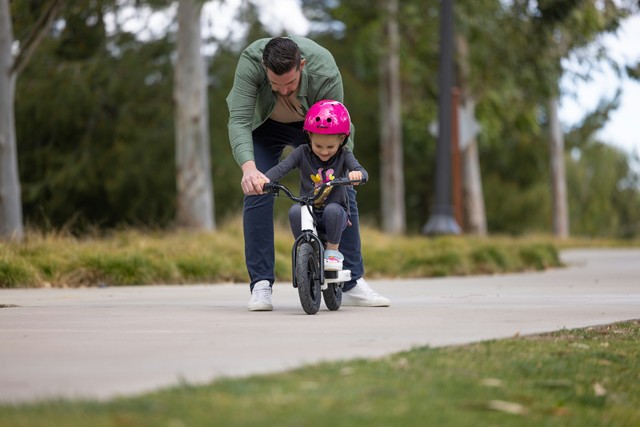
Start by showing them that riding isn’t scary. Sit on the bike yourself and demonstrate how it works. You can even scoot forward by pushing off the ground with your feet — showing that it’s all about balance and fun.
Once your child is less nervous, gently support them by the shoulders while they practice pedaling and steering. Step by step, they’ll start feeling more confident and find their balance naturally.
How to Help Your Child Conquer the Fear of Riding
© Haydn Golden / Unsplash
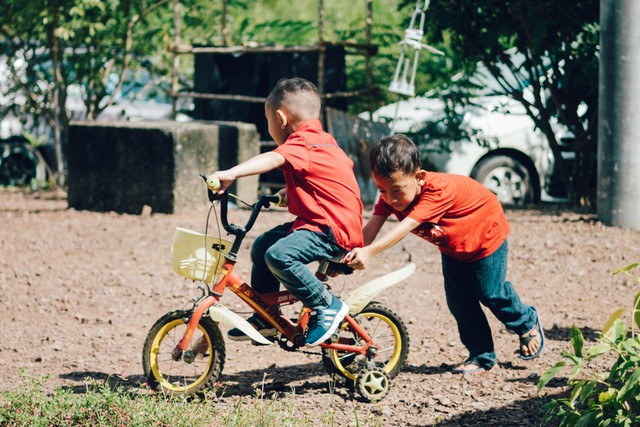
A key factor in reducing fear is the height of the bike seat. In the beginning, adjust the seat so that your child can easily put both feet flat on the ground anytime they feel unsteady. Later, when confidence grows, you can raise the seat to a proper riding height.
At first, it’s best to use training wheels on both sides to help your child maintain balance. But remember: those little wheels should not be level with the main wheels — otherwise, the bike can wobble dangerously or tip over.
Before your child hops on, explain the key differences between a tricycle and a two-wheeler. Show how sharp turns can cause falls and why braking properly is important for safety.
Choosing the Right Bike for Your Child
© Kenny Eliason / Unsplash
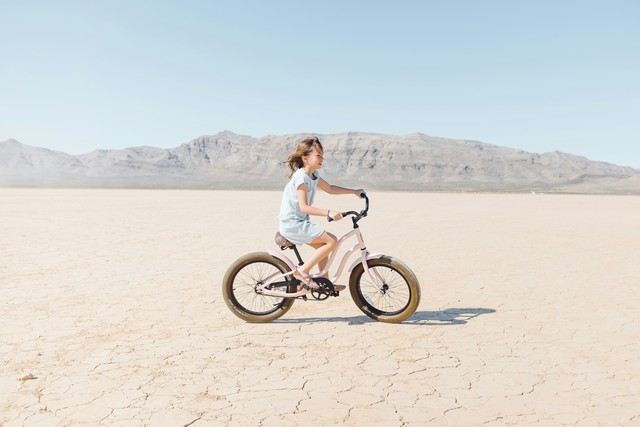
It’s tempting to buy a “bike to grow into” — one that’ll last from age five to seven. But if your goal is to teach your child to ride confidently without training wheels, this approach won’t work.
For learning, your child’s feet must be able to touch the ground flat while sitting on the seat. This is the foundation of safety and confidence.
So, a three-year-old likely won’t manage a bike with wheels larger than 12 inches (30 cm), while a four-year-old shouldn’t go over 14 inches (36 cm).
The best budget-friendly option is to buy a used bike — after a year or two, the previous owner probably hasn’t worn it out completely. Look for the lightest model you can find. Don’t listen to anyone praising a 26–33 lb (12–15 kg) bike with the argument that “it’s more stable.”
When choosing, use this handy wheel-size chart as a guide:
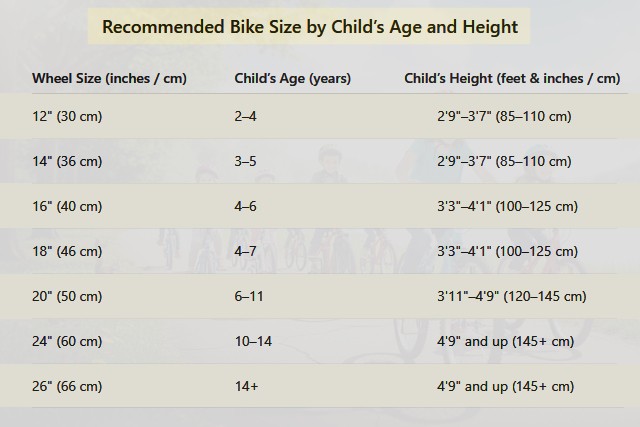
image on top: Michal Vrba/ Unsplash


