We admire famous paintings and think, “Beautiful.” But Renaissance masters, post-impressionists, and modernist artists were often playing a game with viewers — one whose rules they never explained.
They hid mathematics, personal tragedies, political messages, and even music inside their masterpieces. And these secrets have been sitting right in front of us for hundreds of years.
At AdmiGram.com, we found some of the most fascinating examples. After reading this, you may never look at these paintings the same way again.
What We Missed in These Paintings for 500 Years
“The Starry Night” — Vincent van Gogh
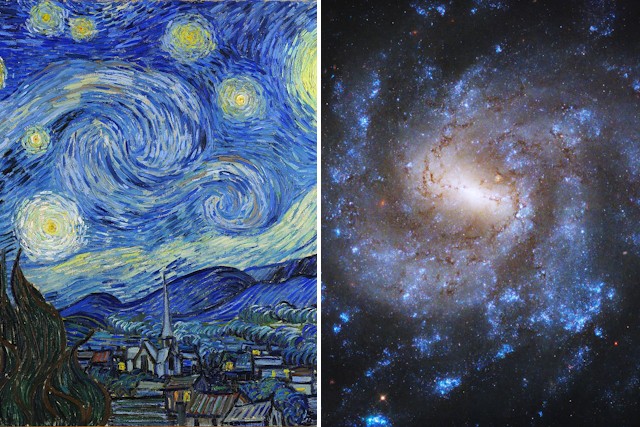
At first glance, the swirling sky in The Starry Night looks like pure imagination.
But scientists noticed something unexpected.
In 2006, researchers found that the patterns in Van Gogh’s famous sky closely resemble mathematical models used to describe turbulence — the chaotic movement of air and fluids.
What’s especially surprising is that Van Gogh painted the masterpiece decades before scientists fully understood these patterns.
Even more interesting, similar effects appear mostly in works he created during particularly difficult periods of his life.
“The Birth of Venus” — Sandro Botticelli
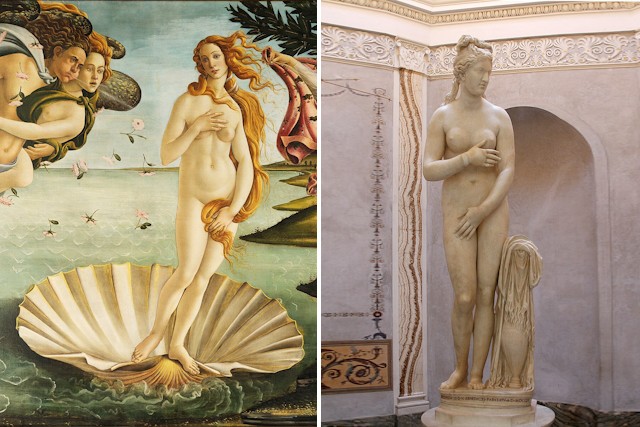
Most people focus on Venus standing on a giant seashell.
But art historians pay attention to her pose.
She stands almost exactly like ancient Greek and Roman statues known as Venus Pudica, or “Modest Venus.”
To viewers of Botticelli’s time, this wasn’t accidental. It was a clear reference to classical antiquity and ancient wisdom.
There’s another hidden detail many people miss.
The orange trees in the background may be a subtle tribute to the powerful Medici family, who supported the artist and were closely associated with oranges as a family symbol.
“The Kiss” — Gustav Klimt
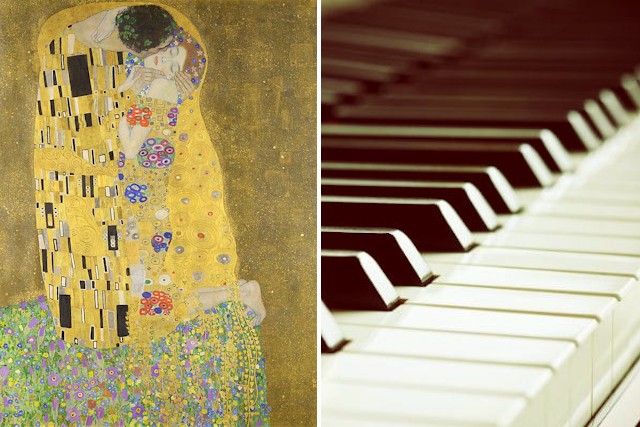
Few paintings capture romance quite like The Kiss.
But some researchers believe Klimt may have hidden a musical reference inside the artwork.
According to one theory, the decorative shapes on the man’s robe resemble the arrangement of piano keys. Supporters of the idea point out that the number of light and dark rectangles closely matches the total number of keys on a modern piano.
Whether intentional or not, the theory fits perfectly with Vienna’s rich musical culture during Klimt’s lifetime.
There’s another detail that’s easier to overlook.
The couple appears to be standing near the edge of a cliff.
The contrast between love and danger may have been Klimt’s way of reminding viewers that happiness often comes with uncertainty.
“The Last Supper” — Leonardo da Vinci
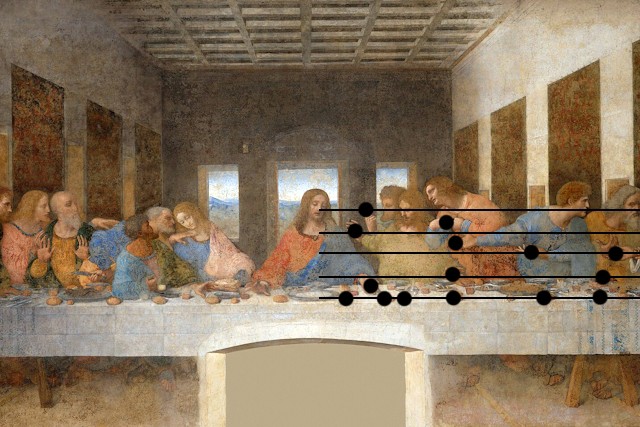
Leonardo da Vinci loved puzzles.
That’s one reason a fascinating theory about The Last Supper attracted so much attention.
In 2007, Italian musician Giovanni Maria Pala suggested that the positions of the apostles’ hands and the loaves of bread could be interpreted as musical notes when placed on a staff.
The result was a short melody that sounds surprisingly similar to sacred church music.
No one knows whether Leonardo intended this hidden composition, but the idea certainly matches his reputation as one of history’s greatest problem-solvers.
“The Scream” — Edvard Munch
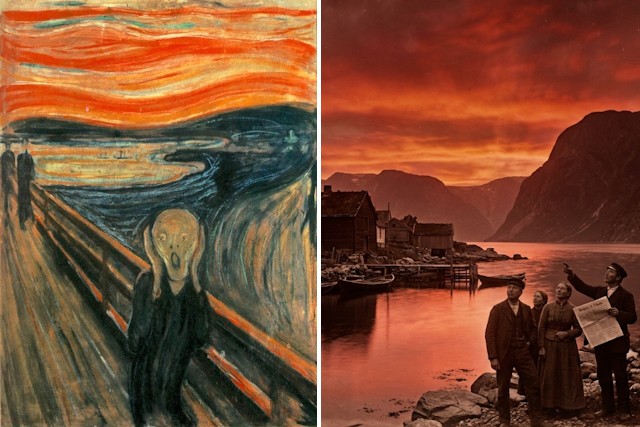
The dramatic red sky in The Scream has become one of the most recognizable images in art history.
For years, many people assumed it was simply a symbol of Munch’s anxiety.
But researchers later discovered that the unusual colors may have been inspired by real atmospheric conditions.
After the massive eruption of Krakatoa in 1883, people across Europe reported seeing unusually vivid red sunsets for months.
Munch himself described a terrifying blood-red sky in his diary, leading some experts to believe that the famous background was inspired by an actual natural event.
The next time you visit a museum, slow down for a moment. The biggest secrets in art aren’t always hidden behind locked doors. Sometimes they’ve been hanging right in front of us for centuries.
image on top: Prashant / Unsplash