Believe it or not, pediatricians say there’s no universal method that guarantees an easy bedtime.
Sleep is one of the most important parts of a child’s life. It’s not just about restoring energy after a busy day — it’s when the body grows stronger. That’s why it’s crucial to establish healthy sleep habits from the very first months.
Parents should remember: bedtime, sleep, and waking up should always happen at the same time each day. A consistent schedule is what helps the brain learn when it’s time to rest. AdmiGram.com will walk you through the essentials.
How to Put Your Child to Bed the Right Way
What Not to Do

© Toa Heftiba / Unsplash
Most specialists agree: no single bedtime method works for every child. You’ll need trial and error to figure out what helps your little one. Still, there are clear don’ts.
Evenings are often the busiest part of the day — parents coming home from work, siblings back from school, everyone buzzing with activity. Remember: babies under two years old absorb your mood. If you’re anxious or tense, they feel it too.
If you’re putting down a baby, do it only when you’re calm. That’s the only way to pass on soothing warmth. Older kids should stop stimulating activities — games, homework, cartoons — at least an hour before bed. Encourage a simple nighttime routine like brushing teeth and washing up. And remember: never try to force a wide-awake, energetic child to sleep. Wait until they’re drowsy.
How Much Sleep Do Children Need?

© Tamara Govedarovic / Unsplash
Studies show average sleep needs by age:
- Newborns (0–3 months): 14–17 hours per day (sometimes 11–19)
— Sleep comes in chunks of 2–4 hours, no clear day/night pattern.
— Awake time is short, about 30–90 minutes at a stretch. - Up to 3 months: 14–17 hours per day
— At night: 8–9 hours (with feedings)
— Daytime: 3–5 naps totaling 6–8 hours. - 3–10 months: 12–16 hours per day
— At night: ~9–11 hours (fewer wakings by 6–9 months)
— Daytime: 2–3 naps, 3–4 hours total. - 10 months – 2 years: 11–14 hours per day
— At night: 10–12 hours
— Daytime: 2 naps (often down to 1 nap by 15–18 months), 2–3 hours total. - 3–5 years: 10–13 hours per day
— At night: 10–12 hours
— Daytime: usually 1 nap (1–2 hours), but many drop it by age 5. - 5 years: 10–13 hours per day
— Mostly just nighttime sleep (10–12 hours), sometimes 1 short nap (~1 hour). - 6–12 years: 9–12 hours at night
— Daytime naps usually no longer needed. - 13–18 years: 8–10 hours at night
— Most teens get less than recommended, but aim for at least 8 hours.
Parents often ask: “Do older kids really need naps?” The answer: not if they sleep well at night. But if your school-aged child constantly nods off in the afternoon, that’s a sign they aren’t getting enough rest overall.
Signs Your Child Isn’t Getting Enough Sleep
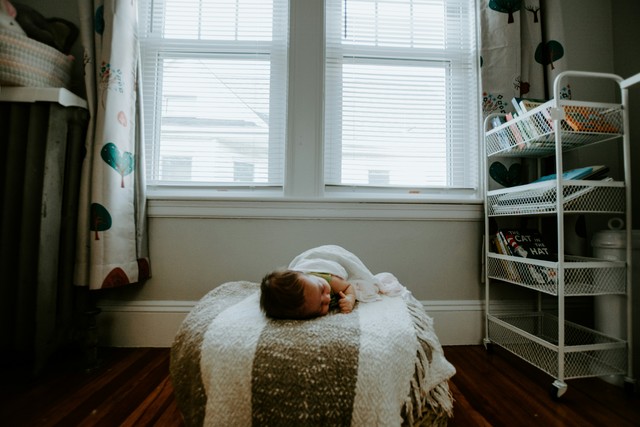
© Kelly Sikkema / Unsplash
- Hard to wake in the morning
- Moody or tearful right after waking
- Low energy and clumsiness, especially early in the day
- Struggles to focus in school, poor memory or attention
Keep in mind: chronic insomnia is more common in children with underlying health issues. If your child regularly can’t sleep, see a pediatrician first. If no medical problems are found, it may come down to family habits and environment.
Yelling, arguments, or stress at home can keep kids awake all night. So can noisy play, screens, or overstimulation before bed. Instead, create calm rituals — like listening to a soft audiobook.
A Healthy Sleep Environment
- Keep the bedroom well-ventilated
- Use blackout curtains to block streetlights and moonlight
- Add a nightlight if your child fears the dark
- Maintain a strict sleep schedule — same bedtime and wake-up time every day
When you build a consistent routine, bedtime becomes smoother, and your child will finally start getting the rest they need.
image on top: Helena Lopes / Unsplash