
Laundry detergent stopped being just white powder in a cardboard box a long time ago. Today, you can choose from liquids, pods, powders, concentrated formulas, and even detergent sheets. Some promise to remove tough stains, others claim to protect colors, soothe sensitive skin, or be better for the planet.
But how much of this actually matters?
We at AdmiGram.com looked at independent laboratory tests, detergent formulas, environmental certifications, and reviews from real customers. And we found one important thing: a more expensive bottle doesn’t necessarily mean cleaner clothes, and the word “natural” on the label doesn’t automatically mean the detergent works better.
10 Best Laundry Detergents: What Actually Works
A Little Laundry Science: What’s Really in Detergent?
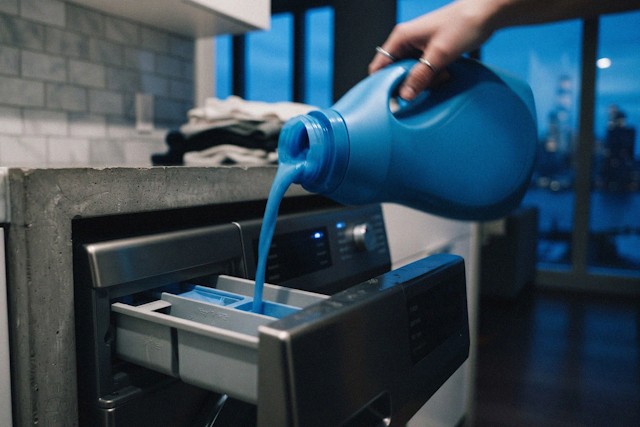
Modern laundry detergent is basically a tiny cleaning team, with every ingredient doing a different job.
Surfactants
Surfactants are the main “engine” of a laundry detergent. They reduce the surface tension of water, helping it spread through fabric and reach dirt trapped between the fibers.
The surfactant molecules then surround grease and dirt particles, creating tiny structures called micelles. The dirt stays inside these structures and gets washed away during the rinse cycle.
Enzymes
Enzymes are the specialists when it comes to stains.
- Protease breaks down protein-based stains such as blood, sweat, and egg.
- Amylase helps tackle starch-based messes from foods such as potatoes, sauces, and other starchy foods.
- Lipase is especially useful against grease and body oils.
Other enzymes, including cellulase and mannanase, help break down plant-based and other complex organic stains.
Enzymes are particularly useful when washing in cold water. Modern enzyme systems help detergents clean effectively without relying on very high temperatures.
Water Softeners
© Maria Oswalt / Unsplash
Hard water contains high levels of calcium and magnesium. These minerals can interfere with surfactants and make detergent less effective.
That’s why good detergents contain builders — ingredients that bind to these minerals and keep them from interfering with the cleaning process.
This is one reason the same detergent can work amazingly well in one home and noticeably worse in another.
Bleaching Ingredients
This is where two very different things are often confused.
- Oxygen bleach actually oxidizes stains and helps brighten fabrics. Sodium percarbonate is one of the most common ingredients used for this purpose.
- Optical brighteners, on the other hand, don’t actually bleach fabric. They leave tiny amounts of fluorescent compounds on the fibers that make white fabrics look brighter.
How Does Laundry Detergent Actually Work?

© No Revisions / Unsplash
Good laundry results depend on several things working together:
chemistry + mechanical action + time + temperature.
The detergent provides the chemistry, the washing machine drum provides the mechanical action, and temperature can speed up many chemical processes.
That’s why the old idea that “hotter is always better” is outdated.
Modern detergents are designed to work at lower temperatures, and the EPA notes that heating the water can account for roughly 90% of the energy used by a washing machine.
But there’s an important catch: cold water saves energy, but it doesn’t automatically make every load perfectly clean.
For everyday clothes, a cold cycle can work extremely well. But heavily greasy or heavily soiled clothing, as well as certain hygiene-related loads, may benefit from warmer water.
Liquid or Powder?
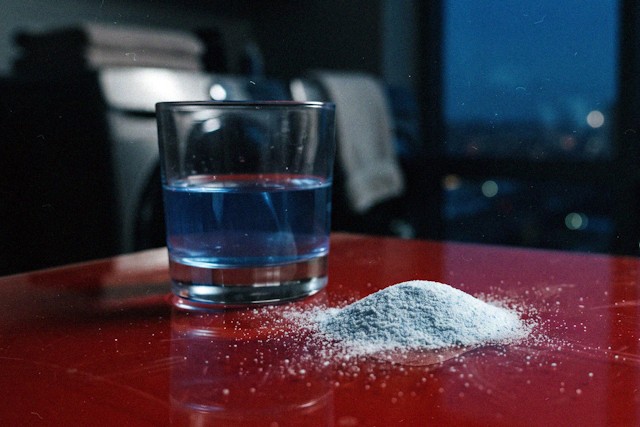
Now we get to the real laundry debate.
Liquid Detergent
Pros:
- Dissolves easily in cold water
- Great for pretreating stains
- Works well on greasy stains
- Easy to measure
- Rarely leaves undissolved particles
- Works well in most modern HE machines
Cons:
- Contains a lot of water by weight
- Usually requires more plastic packaging
- Concentrated formulas can be expensive
- It’s easy to use too much
- Not every liquid formula contains a full range of enzymes
- Most liquid detergents don’t contain oxygen bleach
That last point is especially important.
Ariel in Europe, for example, notes that powders generally contain bleaching ingredients, while liquids and gels usually do not.

© Julia Ly / Unsplash
Powder Detergent
Pros:
- Often costs less per load
- Excellent for white laundry
- Easily formulated with oxygen bleach
- Usually contains a strong builder system
- Less water needs to be transported and stored
- Particularly effective against dirt, grass stains, and some protein-based stains
Cons:
- May dissolve less effectively when overdosed or used in very cold water
- Less convenient for pretreating stains
- Too much can leave residue on fabrics
- Some formulas can be too harsh for delicate fabrics
Interestingly, recent testing continues to support a rather old-fashioned idea: powder is far from obsolete.
Powder detergents often deliver very strong stain removal while costing less than liquids or pods.
What About Laundry Pods?

Pods are incredibly convenient. There’s no measuring, no guessing, and no detergent-covered cap.
But that convenience comes with a higher price.
There’s also an important safety issue: laundry pods can be particularly dangerous in homes with young children or people with cognitive impairments. They should always be stored securely and out of reach.
And what about the increasingly popular laundry detergent sheets?
So far, the results are less impressive. In laboratory testing, sheets have generally performed worse at removing stains than liquid detergents, powders, and pods.
10 Best Laundry Detergents
Below is not a list based on advertising claims. It’s a practical ranking based on a combination of laboratory testing, ingredients, customer feedback, and the strengths of specific formulas.

Important: When we say a detergent “bleaches” here, we mean that it contains a real oxygen-bleaching ingredient — not simply an optical brightener.
So, What Should You Actually Buy?
Once you strip away all the pretty packaging and marketing promises, the picture becomes surprisingly simple.
If You Want Maximum Cleaning Power
Tide Plus Ultra Stain Release or Persil Original.
Both are powerful all-purpose liquid detergents with enzymes, making them good choices for everyday laundry as well as tougher stains.
If You Prefer Powder
Tide Plus Ultra Oxi Powder is a strong American option.
For Europe, consider Ariel Original Powder.
Powder is especially appealing for white clothes, towels, and heavily soiled laundry.
If You Have Sensitive Skin
Kirkland Ultra Clean Free & Clear, Tide Free & Gentle, or all free clear.
All three are more interesting choices than heavily scented detergents for people who don’t tolerate fragrances well.
If Environmental Impact Matters
Seventh Generation is a good compromise between environmental considerations and the cleaning performance people expect from a conventional detergent.
Ecover ZERO is worth considering if fragrance-free and gentler formulas are your priority.
Dirty Labs is one of the more interesting high-tech eco-friendly options. However, weaker results in independent testing are a useful reminder that “eco-friendly” doesn’t automatically mean “cleans better.”
One More Little Laundry Trick

Don’t automatically fill the detergent cap to the first line you see.
More detergent does not mean cleaner clothes.
In fact, using too much can make rinsing more difficult and leave detergent residue on your clothes. This can be especially noticeable in modern HE machines, which use relatively little water.
And if you have hard water, look for a detergent with a strong builder and water-softening system. The minerals in hard water can significantly reduce the effectiveness of surfactants.
Finally, cold-water washing isn’t the enemy of clean clothes.
Modern enzyme systems are specifically designed to work at lower temperatures, and European brands such as Ariel and Persil actively emphasize their cold-water performance.
So the ideal laundry strategy may be much simpler than it seems:
Use a good liquid detergent for everyday laundry and keep a strong powder on hand for whites and heavily soiled clothes.
Your washing machine probably doesn’t need 15 different bottles.
It just needs the right chemistry — and a little common sense.
image on top: Kaitlyn Pixley / Unsplash


