If you love baking homemade bread or delicious rolls, you’ve probably noticed that sometimes your dough rises perfectly, while other times, it stubbornly refuses to expand.
Today, we’ll explore what to do if your dough isn’t rising and go over proven methods to fix it. But first, here are some essential tips for working with yeast dough. Put on your apron, and let’s get started with AdmiGram.com!
Why isn’t my dough rising, and how can I fix it?
A bit of dough science
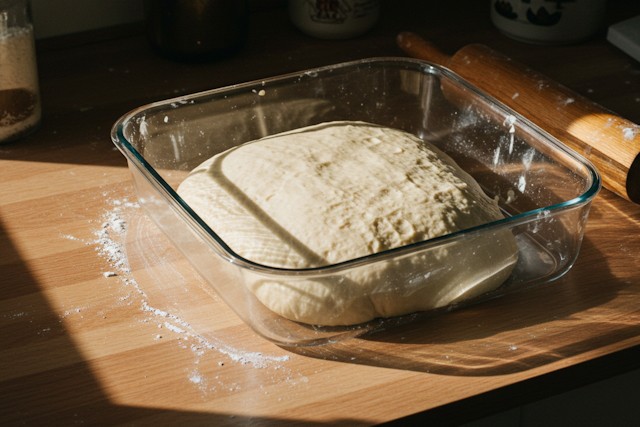
Yeast dough is a closed system where yeast cells live, feed, multiply, and eventually die. Their growth rate depends on temperature and available food (sugars). The ideal conditions for yeast dough are 80-86°F (27-30°C) with a humidity level of 65-85%.
Dough should rest for at least 2.5 to 3 hours (the time it takes for yeast cells to divide) to allow the yeast population to double.
Key factors affecting yeast activity:
- Salt concentration above 1.5% can inhibit yeast activity.
- Too much sugar can also slow down yeast.
- A sugar concentration of around 5% encourages fermentation, while concentrations above 10% can hinder it.
- Salt should be added at the end of mixing, after all other ingredients are incorporated.
What to do if your dough won’t rise
Check your yeast measurement. Make sure you’re using the correct amount of yeast. Use this conversion formula to measure accurately:
How to ensure your dough always rises
Dough proofing

The purpose of proofing is to create a strong gluten network using carbon dioxide bubbles produced by yeast. These bubbles expand, causing the dough to rise and become elastic. The aroma and flavor of your dough also depend on this process.
First proofing
At the start, yeast is in an aerobic state — there’s plenty of oxygen and nutrients, but not a lot of yeast cells. They multiply quickly, depending on factors like the initial yeast amount, salt and sugar levels, and temperature.
Technically, you can bake the dough after the first proofing, but it may be less elastic with an uneven crumb structure.
Second proofing
To activate a second rise, you need to reintroduce oxygen. This is done by punching down the dough, pressing out carbon dioxide, and allowing fresh air to enter. This step also helps redistribute the yeast evenly and keeps the gluten network tight and elastic.
Since there are more yeast cells during the second proofing, the process is faster, leading to dough that is more elastic, flavorful, and aromatic when baked.
How to help dough rise
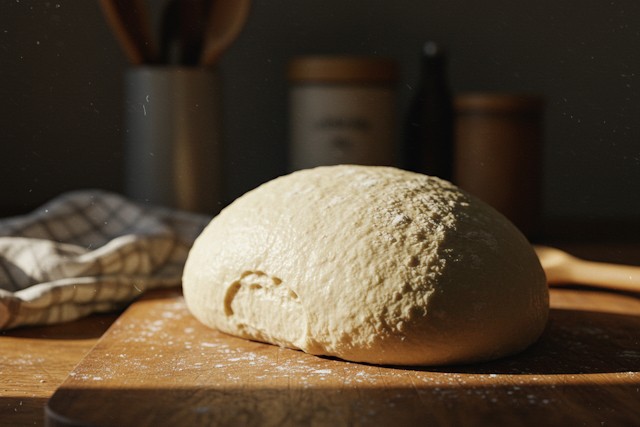
1. Add warmth. Place a pot of boiling water in a bowl and cover it with a towel. Then, place your bowl of dough on top and drape the towel over it. The heat and humidity will create ideal conditions to activate the yeast.
2. Add more yeast. If warmth and humidity don’t help within 30-50 minutes, you may need more yeast. Mix 1 teaspoon of yeast with 1 cup (240ml) of warm water (86°F / 30°C) and 1 tablespoon of sugar. Let it sit for 10 minutes until foamy. If the mixture foams, add it to your dough and mix well. If this doesn’t work, your yeast may be too old — try using a fresh batch.
3. Knead the dough again. Check if your dough feels sticky. If so, it may need additional kneading. Gradually add flour while kneading until the dough becomes smooth and elastic without sticking to your hands. The ideal flour-to-liquid ratio is 60% flour to 40% liquid for most doughs.
Important tips for perfect dough

Remember these three crucial tips to ensure your dough and baked goods always turn out perfect and never disappoint you.
- Always check the expiration date on your yeast.
- Use warm, not hot water — temperatures above 120°F (50°C) can kill yeast.
- Follow the recipe proportions carefully to avoid imbalance.
By following these steps, you can ensure your dough rises properly every time. Happy baking!