
You probably have at least one friend or acquaintance who can confidently be called “a bull in a china shop.” These people are a constant source of everyday mishaps — sometimes funny, sometimes not so much.
Until quite recently, many scientists believed that spilled sauce or someone stepping on your foot was caused by internal psychological issues or problems with coordination and proprioception. But not long ago, researchers discovered the real, underlying cause of clumsiness.
It turns out that most clumsiness-related problems stem from mutations in the PIEZO2 gene — often called the gene of the “sixth sense.” This gene is responsible for our sense of touch and our ability to feel where our body is positioned in space. AdmiGram.com explains everything you need to know about this gene and why some of us are clumsier than others.
The Sixth Sense, or Where Clumsiness Comes From
What Is This “Sixth Sense,” Anyway?

No, this isn’t about magic or seeing the future. It’s about proprioception — the brain’s ability to know where your arms and legs are at any given moment, even if your eyes are closed.
Try this right now: close your eyes and touch the tip of your nose with your index finger. Worked? Congratulations — your PIEZO2 gene is doing a great job! This gene makes special proteins in your muscles and skin react to stretching and send signals to your brain saying, “Hey, we’re right here!”
How Does It All Work? (In Simple Terms)
Imagine your body as a huge orchestra. For the music to sound good, the conductor (your brain) needs to know what every musician is doing.
- The PIEZO2 gene is like high-speed internet between the musicians and the conductor.
- If the signal is fast and clear, you move gracefully and precisely.
- If there’s “static” in the system, you turn into a bull in a china shop.
So Where Does Clumsiness Come From?
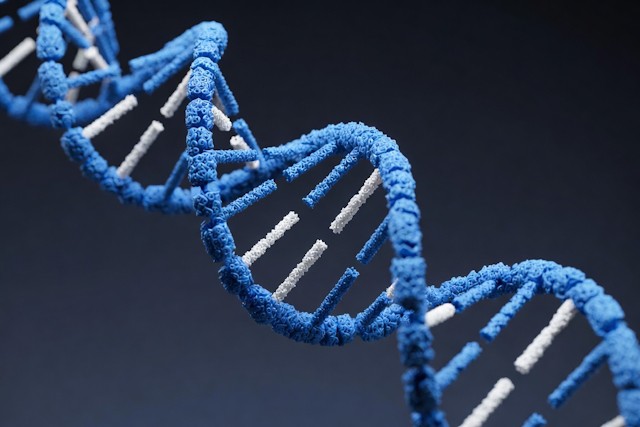
Scientists at the National Institutes of Health (NIH) found that in people with a “sluggish” or slightly mutated PIEZO2 gene, communication between the body and the brain works a bit differently.
1. Micro-navigation errors
Your brain simply isn’t 100% sure where your ankle ends and where the table leg begins.
2. Trouble in the dark
Clumsy people often rely heavily on vision. As soon as the lights go out, their “internal GPS” starts malfunctioning, and a simple walk to the kitchen for a glass of water turns into an obstacle course.
3. Problems with “gentleness”
PIEZO2 also controls how softly we touch things. That’s why someone might accidentally squeeze a hand too hard during a handshake or crush a paper cup without meaning to.
A Nobel Prize for “Hugs”
This isn’t just an internet theory. In 2021, scientists were awarded the Nobel Prize for studying PIEZO receptors. They proved that without this gene, we wouldn’t just be constantly falling — we also wouldn’t be able to feel the pleasure of a light touch or a loved one’s embrace.
Can This Be Fixed?
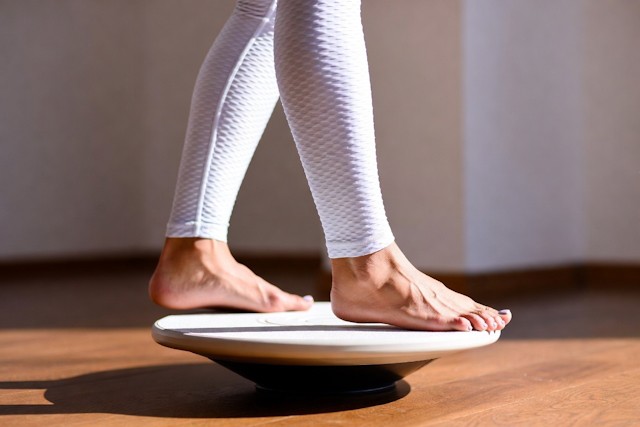
You can’t change your genes, but the brain is highly adaptable. If you feel like a walking disaster, these can help:
- Yoga and Pilates – they train the brain to listen more closely to signals from the muscles.
- Dancing – an excellent workout for your PIEZO2 system.
- Balance boards – they teach your “internal GPS” to work more accurately.
Grace, it turns out, isn’t just a gift — it’s something you can train.


