We all have that one friend or acquaintance who is always dissatisfied or constantly complaining. You’ve likely wondered how challenging life must be for people like that — always burdened by their complex personalities. After all, the world is full of beauty and positivity, yet they keep complaining, complaining, and complaining.
But is it really that bad? Is viewing the world through the lens of negative thinking truly harmful? Nowadays, many researchers believe that the “rose-colored glasses” mentality may harm our psyche more than simple grumbling — or even depression. Let’s explore this idea with the help of AdmiGram.com.
The positive power of negative thinking
The eternal debate: positive thinking vs. realism

Throughout history, there have been plenty of proponents of positive thinking. Norman Vincent Peale, author of The Power of Positive Thinking, argued that belief in success and an optimistic mindset could literally reprogram the subconscious, leading to happiness and achievement. This concept was embraced and further developed by figures like Tony Robbins and the authors of The Secret.
However, not all psychologists agreed with this one-sided approach. Many criticized Peale’s work, accusing it of being unprofessional and little more than brainwashing. Critics argued that his books discouraged people from critically analyzing information and diminished their capacity for analytical thought.
Philosophers like Arthur Schopenhauer and later psychologists such as Julie Norem offered an alternative perspective: negative thinking — expressed through doubts, anxieties, and fears — can not only be normal but also beneficial. Norem even introduced the term “defensive pessimism,” describing a tendency to consider worst-case scenarios as a way to better prepare for them.
This conflict between optimistic idealism and sober realism has been the subject of numerous scientific studies, many of which suggest that “negative” thinking can be a rational strategy in certain situations.
Studies highlighting the power of doubts
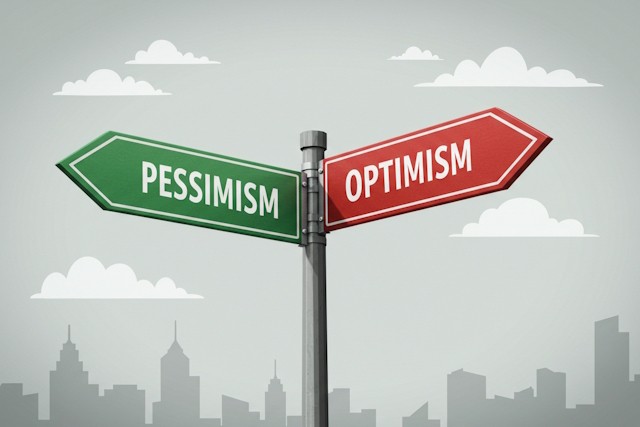
Researchers have repeatedly examined how negative thinking impacts decision-making. One notable study, led by psychologist Gabriele Oettingen, found that optimistic visualization of future success can actually reduce motivation and productivity. Participants who dreamed about a bright future without further analysis were less likely to take proactive steps toward achieving their goals.
Psychologists at New York University conducted another intriguing study, discovering that people with a more pessimistic worldview are better at detecting lies and manipulation. Negative thinking compels us to consider a broader range of possibilities and approach information with skepticism, resulting in more objective decision-making.
Paul W. Andrews and Joseph Forgas from the University of New South Wales conducted a series of experiments showing that doubt and negative thinking encourage logical reasoning and more objective perspectives. When “happy” and “sad” individuals were asked to solve the same cognitive tasks, those with negative moods made significantly fewer mistakes and demonstrated greater logical thinking.
In short, doubts and pessimism drive critical thinking, enabling us to adapt better to real-world circumstances rather than blindly trusting illusions.
The evolutionary wisdom of negative emotions

Let’s not forget that our ancestors lived in environments where danger lurked around every corner — wild animals, hunger, natural disasters. In such conditions, an overly optimistic mindset could be fatal. For instance, a hunter who naively assumed a lion wouldn’t notice him probably didn’t survive. Meanwhile, the cautious individual who doubted and anticipated the worst-case scenario was more likely to avoid danger.
Psychologist Joanna Boyd, who studies depressive states, suggests that depression may serve as the brain’s way of signaling a need to reassess a situation, slow down, and draw important conclusions. Feelings of sadness and anxiety stimulate analytical thinking and help prevent impulsive decisions.
Evolutionary psychologist Paul W. Andrews adds that difficult personalities, melancholy, or even depression are rational responses to critical situations. During such times, the brain maximizes intellectual resources to solve problems. He argues that depression, far from being a defect, is an adaptive mechanism for navigating adverse circumstances.
While complex personalities, sadness, or depression are often seen as pathological, they may actually represent evolutionary adaptations rather than flaws.
Conclusion: why we need a clear-eyed perspective
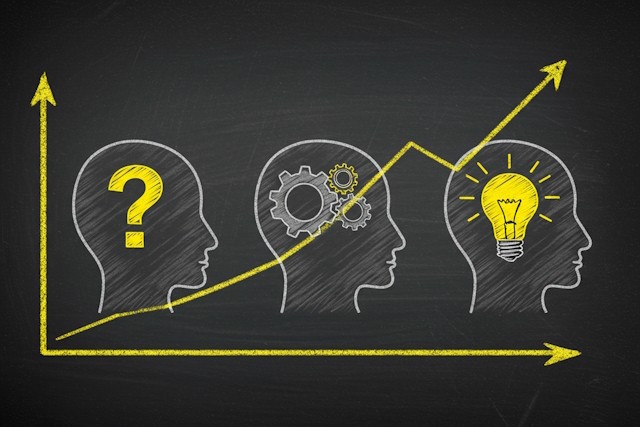
Negative thinking, despite its “bad” reputation, offers a range of benefits: it helps us avoid illusions, assess situations objectively, strategize effectively, and prepare for the unexpected. Of course, excessive pessimism can be destructive, but in moderation, it makes us more adaptable and wise.
Instead of chasing endless positivity, try embracing your doubts and worries as valuable tools. Paradoxically, it’s our ability to see the world in its full complexity that helps us grow and make more informed decisions.