
Shrimp are crustaceans found all over the world. Most of us are used to seeing them on our plates — in soups, salads, or sushi rolls — but few people stop to think about how unusual these creatures really are.
These small inhabitants of the seas can produce one of the loudest sounds in the ocean, change sex during their lifetime, and even form remarkable partnerships with other animals. AdmiGram.com shares scientific facts about shrimp that are truly surprising.
Shrimp Are Stranger Than They Seem: 10 Facts
Some Shrimp Form Friendships with Fish
© Etienne Gosse / Flickr
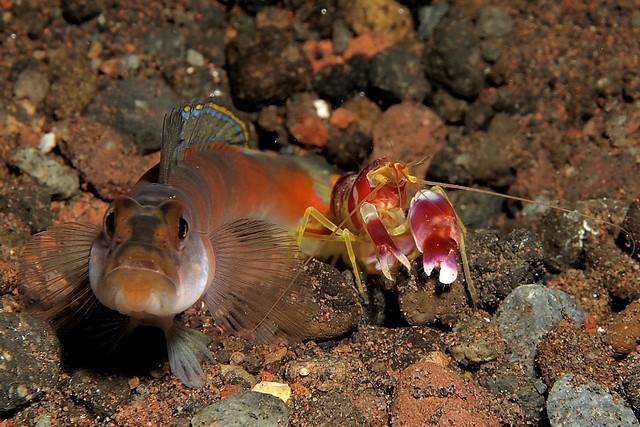
In tropical seas, certain shrimp share their homes with fish. For example, snapping shrimp of the genus Alpheus often live together with gobies from the family Gobiidae. The shrimp digs a burrow in the sand while the fish acts as a lookout. Gobies have excellent eyesight, and when a predator approaches, the fish signals with its tail — both animals then instantly retreat into the burrow. It’s one of the most famous examples of mutual cooperation in the ocean.
Ancient Relatives of Shrimp Lived Over 500 Million Years Ago
Many modern crustaceans belong to the arthropod lineage, which has existed on Earth for hundreds of millions of years. One famous marine predator from the Cambrian period was Anomalocaris. While it isn’t a direct ancestor of shrimp, it shows just how ancient marine arthropods really are.
A Tiny Shrimp Can Be Louder Than a Jet
© Anker A, Grave S / Wikimedia Commons
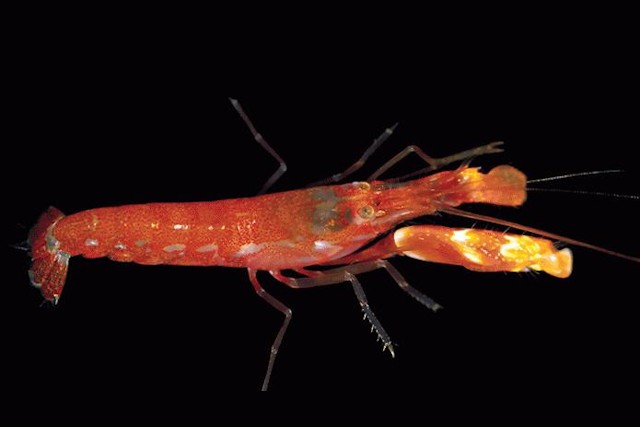
One of the most remarkable ocean creatures is the snapping shrimp from the family Alpheidae. It snaps one of its claws shut so quickly that it creates a cavitation bubble. When the bubble collapses, it produces a powerful popping sound — one of the loudest noises made by any ocean animal. This “shot” can even stun or paralyze small prey.
Shrimp Get Their Pink Color from a Powerful Antioxidant
The characteristic pink-orange color of shrimp comes from the pigment Astaxanthin. This natural carotenoid has strong antioxidant properties. It helps protect cells from oxidative stress and is widely studied in medicine and nutrition.
Thanks to Shrimp, the Ocean Can Literally Glow
View this post on Instagram
You’ve probably seen photos online where the sea appears to glow at night. One organism responsible for this effect is the bioluminescent crustacean Vargula hilgendorfii, known in Japan as “umibotaru,” or the sea firefly. These tiny creatures emit a blue glow through a chemical process called bioluminescence.
A Shrimp’s Heart Is in Its Cephalothorax
Shrimp anatomy is unusual. Their heart is located in the front part of the body, inside the cephalothorax — the fused head and thorax. This arrangement is typical for most crustaceans.
Some Shrimp Can Practically Turn Invisible
© Enziarro (Joseph Stansbury Rosin) / Wikimedia Commons
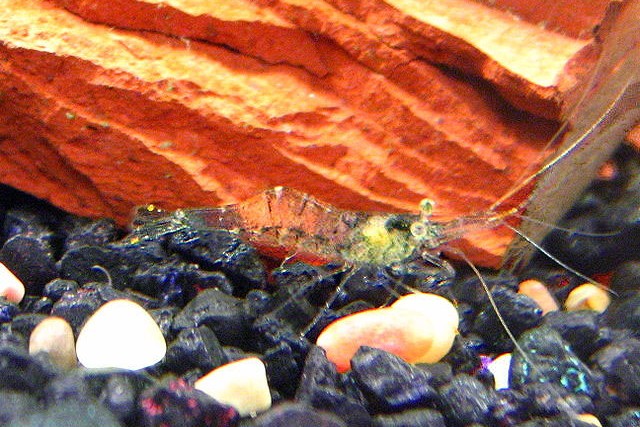
Many shrimp species can become almost transparent thanks to their semi-translucent bodies. This makes them nearly invisible in open water — an excellent defense against predators. For example, glass shrimp from the genus Palaemonetes are so transparent that you can actually see their internal organs and digestive system through their bodies.
Some Shrimp Change Sex During Their Lifetime
In several shrimp species, scientists observe a phenomenon known as protandric hermaphroditism. Young individuals first function as males and later can transform into females. This strategy helps maintain efficient reproduction within the population.
Shrimp Can Be Much Bigger Than You Think
© division, CSIRO / Wikimedia Commons
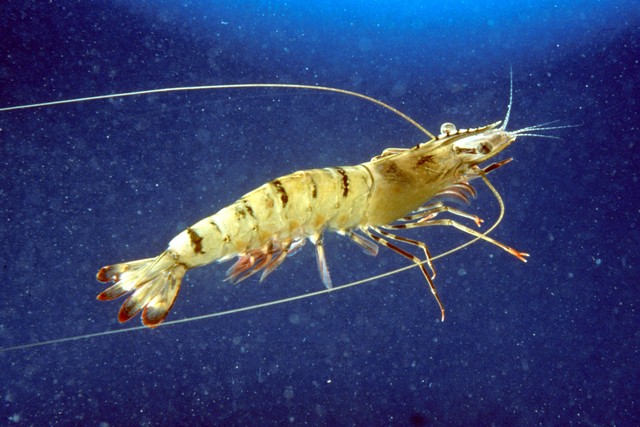
The largest shrimp can grow to more than 12 inches (about 30 cm) in length. Some species, such as the giant tiger prawn Penaeus monodon, can reach impressive sizes. These shrimp are among the largest representatives of their group and are widely farmed in aquaculture around the world.
Shrimp Eyes Can See Almost Everything Around Them
Shrimp eyes sit on movable stalks. This allows them to observe nearly 360 degrees around them. Such a design helps them detect predators quickly and locate food.
image on top: note thanun / Unsplash


