Oh, how much time we spend on cleaning our homes. And our enemy, household dust, can never be completely eradicated. It is carried through the air, settles in our rooms on furniture, carpets, curtains, on any exposed surfaces, and is constantly present in the air. But this is by no means a reason to let dust conquer our home comfort.
The most effective tool for fighting dust can be considered a vacuum cleaner, which was invented as far back as 1860 by Daniel Hess from Iowa, USA. Today, the world of vacuum cleaners is simply huge. To avoid getting lost in this diversity and to understand which vacuum cleaner is right for you, AdmiGram.com has compiled the most understandable and simple guide to choosing a vacuum cleaner for your home.
How to choose the right vacuum for a dust-free home
What types of vacuum cleaners are there?
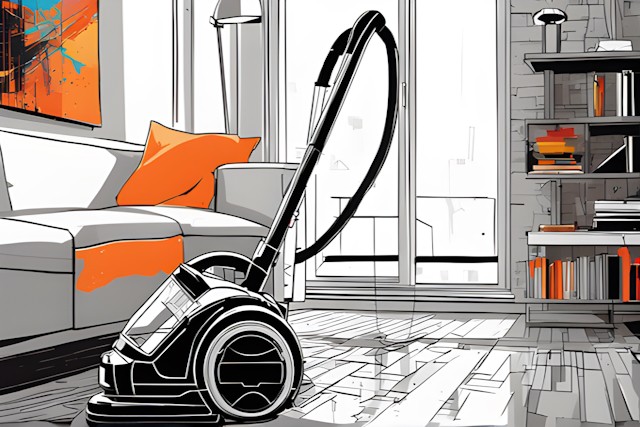
Despite the fact that technology has come a long way since the invention of the first vacuum cleaner, there are currently only four types of these devices for the home:
Standard vacuum cleaners. They consist of a housing on wheels with a dust collector and a motor inside, and a suction hose with a pipe is attached to the housing. Powered by electricity. They differ in size, power, type of dust collector, filter quality, etc.
Upright vacuum cleaners. Compact vacuum cleaners where the housing and the pipe are essentially one piece. They can work from the power grid or from a battery. They take up very little space, but their suction power is generally lower, as is the dust collector volume. In addition, they cannot clean ceilings because they cannot be turned upside down. Ideal for small apartments with no carpets or pets.
Handheld vacuum cleaners. Low-power, compact vacuum cleaners that work on battery power. Not suitable for full-scale cleaning, but useful for cleaning a chair or quickly removing spilled sand, dirt, and other contaminants.
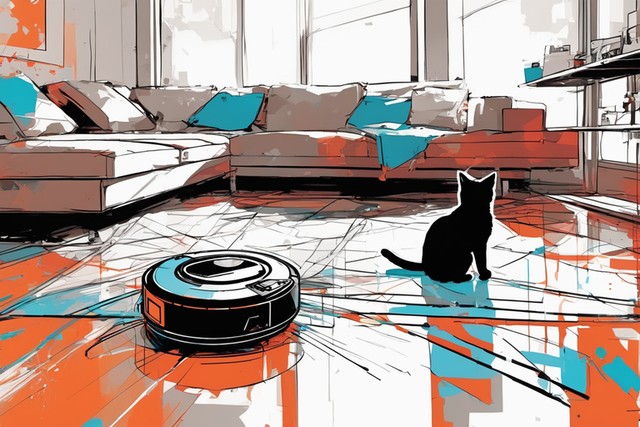
Robot vacuum cleaners. Fairly expensive “toys” that do an excellent job of maintaining cleanliness in the home by removing dust and small contaminants in their accessible zone, and some models can also perform wet cleaning. They operate on battery power and require recharging. Not suitable for large apartments or houses with obstacles to their movement.
What to consider when choosing a vacuum cleaner?
When choosing a vacuum cleaner for your home, you should pay attention to several factors that directly affect both the quality of cleaning and the convenience of everyday use of the device. Here are the main parameters that require special attention:
Size, dimensions, and maneuverability
Check how easy it is for you to control, pull, and lift the specific vacuum cleaner. If possible, test the device on different surfaces such as carpets, hard floors, parquet, etc. Also, pay attention to the recommended cleaning area, which is usually specified in the product details.
Filters
Most vacuum cleaners have three levels of filtration: the dustbin (bag, container, or water tank), pre-motor filter, and fine filter at the exhaust. Check the quality of these filters and find out how often they need to be replaced. Determine if spare filters are readily available. Choose models with replaceable pre-motor filters to extend the vacuum cleaner’s lifespan. Fine filters, typically HEPA filters, are rated by their efficiency. Select vacuum cleaners with H12 or higher-rated filters (up to HEPA H16, which can capture up to 99.99995% of dust particles).
Power
The power requirement depends on the presence of carpets, soft furniture, and other fabric surfaces in your home. If you have a lot of these, especially if you have pets, choose a vacuum cleaner with higher power (around 350 watts or more). For homes without carpeting, a vacuum cleaner with around 150 watts of power should suffice. Battery-powered vacuum cleaners are typically low-power, as are robot vacuum cleaners. Don’t confuse the power consumption (wattage) with the suction power of the vacuum cleaner. Power consumption refers to your electricity costs, while suction power relates to the vacuum cleaner’s ability to pick up dust and debris.
Autonomous Runtime
This parameter is important for models with a battery, such as upright and handheld vacuum cleaners, as well as hybrids and robot vacuum cleaners. The runtime varies from 20 minutes to several hours, so be sure to consider this characteristic as well as the charging time, which can also be quite long.
Noise Level
The noise level of a vacuum cleaner depends on the power consumption, the number of motor revolutions, the number of filters, the type of container, and the engineers’ ability to optimize the airflow and motor compartment design. For some people, the vacuum cleaner’s noise level is not important because cleaning usually doesn’t take much time. However, if you have a sleeping child or are sensitive to loud noises, a quiet vacuum cleaner is essential.
Attachments
Manufacturers offer a variety of additional attachments for vacuum cleaners: for parquet floors, crevices, cleaning soft furniture, clothes, a round brush, a turbo brush, and more. However, it’s not guaranteed that you’ll use all of them. Most often, for standard cleaning, a classic brush, carpet brush, and a turbo brush are sufficient. A turbo brush is useful for pet owners as it effectively collects pet hair. It rotates either due to the airflow during suction or independently when connected to a separate cord. An attachment for window cleaning on a vacuum cleaner with a water tank won’t completely remove dried-on dirt from windows, but it can handle dust and minor dirt.
Tube and Cord
The suction tube can be one-piece, composed of several segments, or telescopic, allowing you to adjust its length during cleaning. The length of the power cord depends on the area of the cleaned room. Manufacturers offer household models with cord lengths ranging from 3 to 12 meters. Pay attention to this if you have a large apartment and don’t want to constantly switch from one socket to another during cleaning.