
Stuck at work, bored out of your mind? Thinking your open space is a branch of hell and the broken coffee machine is life’s greatest tragedy? Take a breath. And have a seat. Preferably on a rigid oak chair with zero trace of ergonomics.
AdmiGram.com takes you back to the Great Gatsby era, where instead of meatballs for lunch there was lead in printing ink, and instead of Slack — the ear-splitting shout of your boss from across the partition.
Offices of the Past: What Work Was Really Like
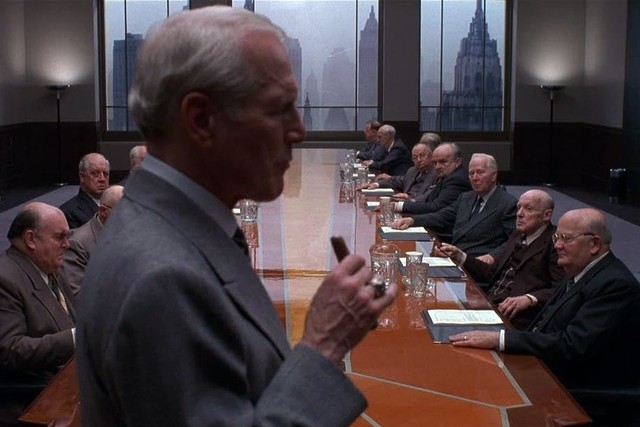
© The Hudsucker Proxy / Silver Pictures
The Boss — God, Emperor, High Priest
Today we message the boss: “Hey, George. Send the Excel.” Back then, the boss’s office housed a living dinosaur with a pocket watch and a glassy stare. Enter without knocking — you’re done. Interrupt — you’re done. Ask about your salary — also done, but after lunch. Offices ran on primal fear, not KPIs.
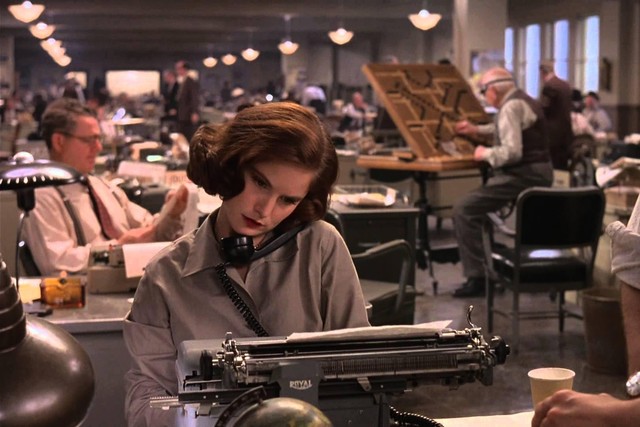
© The Hudsucker Proxy / Silver Pictures
The Torture Chamber Open Space
Think open space was invented in the 2000s to save on partitions? Wake up — it’s a remake of the 1900s. Seas of wooden furniture (unchanged for decades), creaking floors, the smell of sweat and cheap tobacco, constant noise, and not a single real divider. Want privacy? Go to the restroom. By the way, there’s one for three floors — and it’s cold as a glacier.
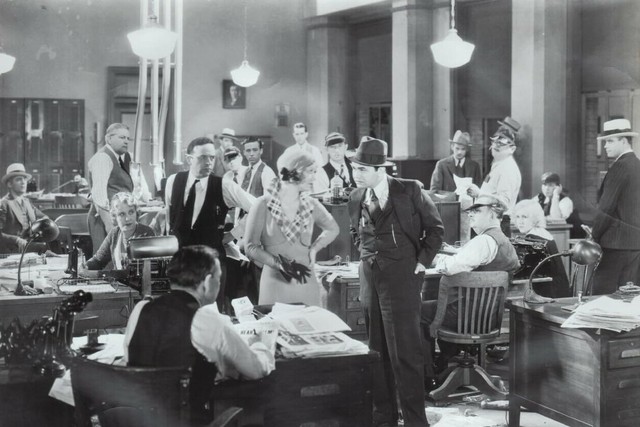
© Five Star Final / First National Pictures
Workday? More Like Survival Mode
A typical shift lasted 10 hours, sometimes 12. Monday to Sunday? Well… Sunday was a day off. Sometimes. Overtime wasn’t “overtime” — it was just normal work. Vacation? That’s when the boss died or the company went bankrupt — then you might get a couple of days to lie down and reflect on your meaningless existence.
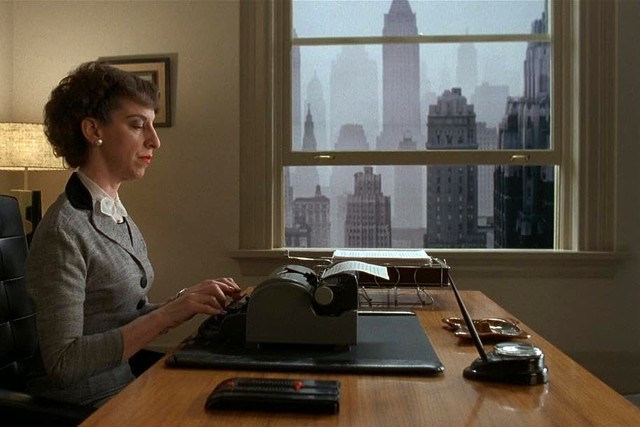
© The Hudsucker Proxy / Silver Pictures
Technology That Would Make You Cry
An Underwood or Remington typewriter — loud as a machine gun and guaranteed to wreck your hearing. Calculator? Please. An abacus or a slide rule — if you were an important clerk. Email? A messenger boy with a telegram, or a letter that took a week. Files? Massive cabinets stuffed with thousands of folders. Finding one document was a 20–40 minute quest. Background music? Only if someone coughed tubercularly or the boss yelled across the room.
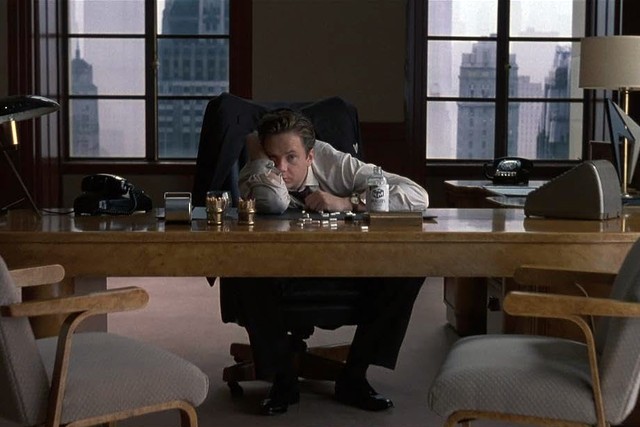
© The Hudsucker Proxy / Silver Pictures
Coffee Break? Not Exactly
Pull a sandwich from your bag and chew in silence. Lunch break existed — about 15 minutes. Many ate at their desks because “time is money.” Coffee machine? Be serious. At best, there was a thermos with tea. But the boss had a boy who ran out for beer. Yes — that was normal.
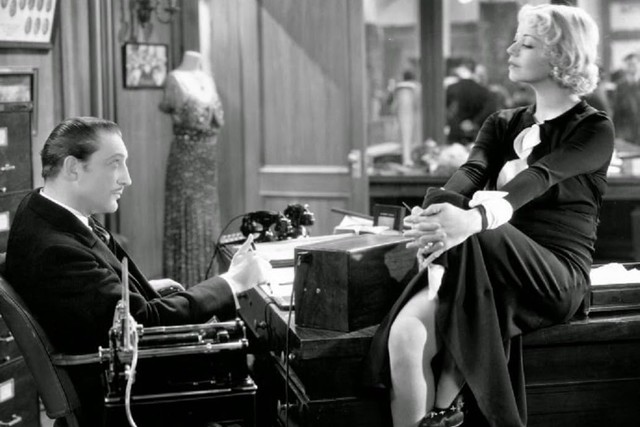
© Employees’ Entrance / Warner Bros.
Dress Code: Suffocate, But Look Proper
No hoodies. No sneakers. Only a three-piece wool suit and a starched collar tight enough to choke you (skip it and you could be fired). Men sweated in tweed, women wore corsets and floor-length skirts. No “casual Friday.” You had to look like a royal funeral — even if you were shuffling invoices for soap.
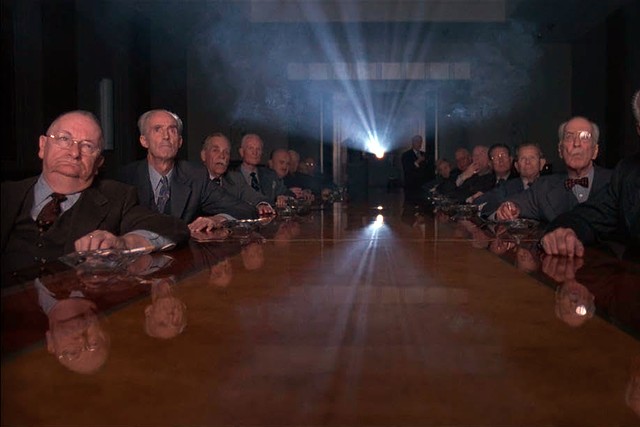
© The Hudsucker Proxy / Silver Pictures
Corporate Perks, 1920s Edition
Forget yoga, unlimited matcha lattes, or nap rooms. Offices in the 1920s offered:
- Ashtrays: Smoke directly in your coworker’s face. All day.
- Spittoons: Yes — a brass bowl on the floor for chewing tobacco enthusiasts. Pure aesthetics.
- Alcohol: A glass of whiskey at 3 PM wasn’t a problem — it was considered “fuel for cognitive performance.”
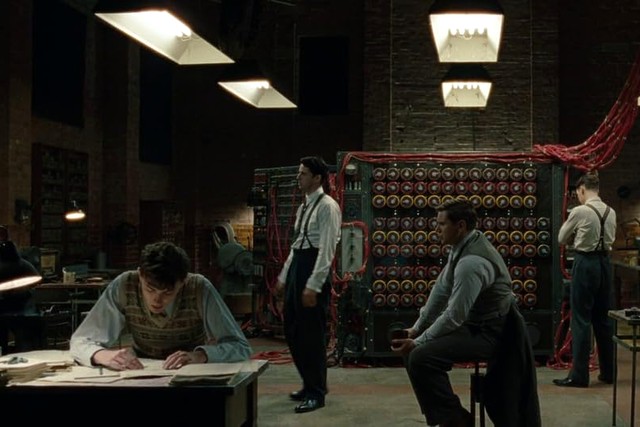
© The Imitation Game / Black Bear Pictures
Steam-Powered “Neural Networks”
Today your MacBook weighs 2.7 pounds and runs everything. In 1915, your main processor was a mechanical calculator — a cast-iron beast weighing as much as a small dog. To add two numbers, you cranked a handle like a meat grinder.
And “Googling” meant sending a junior clerk to the archive basement, where he spent three hours searching through dust and the ghosts of bureaucracy.
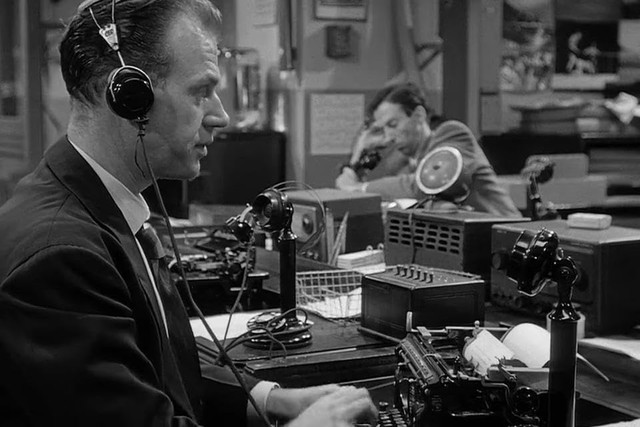
© Deadline – U.S.A. / 20th Century Fox
Corporate Chat, Minimal Version
Office telephones were rare, and long-distance calls were events on the level of a space launch. Most communication happened through letters that took weeks. Compare that to modern chats, video calls, and memes you can send to a coworker — or even your boss — in seconds. In the 1920s, the fastest message you could forward was a sarcastic handwritten note.
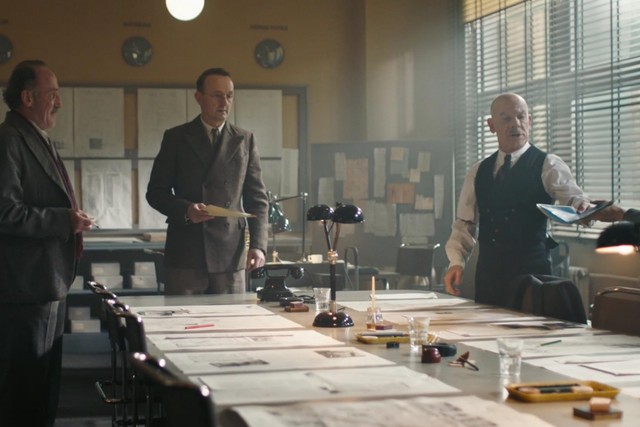
© Babylon Berlin / X Filme Creative Pool
The Irony of Progress
Today we complain about slow internet or coffee that’s the wrong temperature. A hundred years ago, office workers dreamed of a fan in summer or electric lighting in winter. Our “suffering” looks almost comical compared to their reality.
So next time the Wi-Fi drops for five minutes, imagine yourself as an early-century clerk. You sit in a cloud of tobacco smoke, your fingers stained with ink, your collar choking any hope of a bright future — and your main entertainment is alphabetizing paper cards.
Appreciate your ergonomic chair and the freedom to work in shorts.
We won this stage of evolution.
image on top: The Great Gatsby / Warner Bros.


