At AdmiGram.com, we’re convinced that sometimes one book read at the right moment can replace years of therapy or even a life-changing move. Some books hit like a cold shower; others feel like a warm embrace — after which you’re never quite the same.
We’ve selected five iconic books that literally blow up your familiar worldview and transform the way many women think and live. After reading them, a quiet (and sometimes loud) inner shift often happens: something falls away, something clicks into place, and most importantly, you finally feel that you have the right to be yourself.
5 Books That Change a Woman’s Mindset and Life
Simone de Beauvoir — The Second Sex (1949)
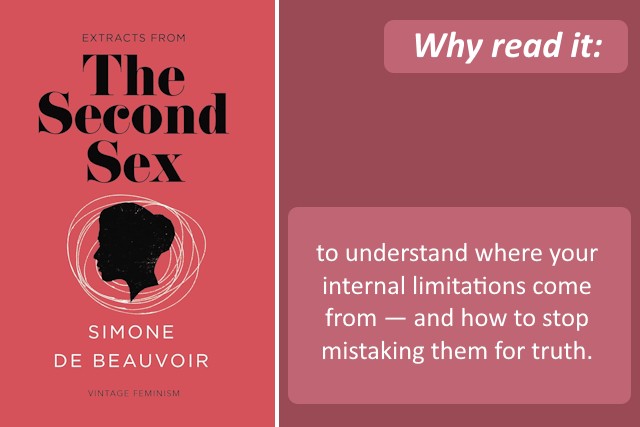
If there were a literary bomb called “Why the world is built this way — and not another,” this would be it. De Beauvoir calmly and relentlessly shows that most things we consider “naturally feminine” are actually the result of culture, upbringing, and centuries-old habits of treating women as secondary.
“One is not born, but rather becomes, a woman” is now a famous quote, but in the context of the entire book it lands like a slap in the face. After The Second Sex, it becomes very hard to keep playing the role of the “good girl” who always “should.” Many women first dare to ask: “Wait — why should I?”
Virginia Woolf — A Room of One’s Own (1929)
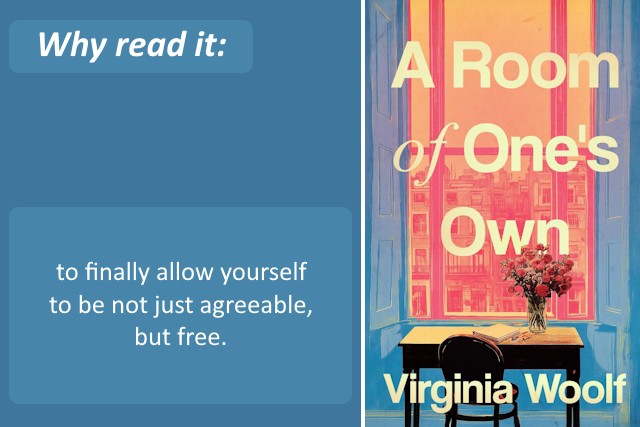
Short, elegant, and devastatingly precise. In about 150 pages, Woolf explains why women produced so few great works of art for centuries: they lacked a room of their own and £500 a year — in other words, money and personal space.
Sounds obvious? Only until you read it. After this book, you want to lock the door, kick out everyone who interrupts your thinking, and finally start living your life instead of someone else’s. For many women, Woolf is the first permission slip to stop being “convenient” 24/7.
Elizabeth Gilbert — Eat, Pray, Love (2006)
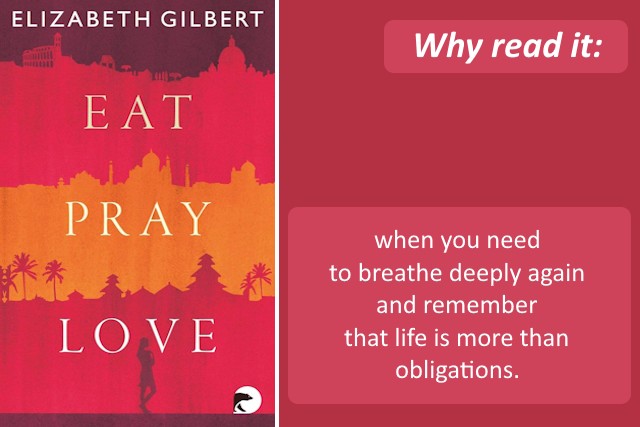
Yes, that one. Loved by some, dismissed by others as “too mainstream.” But here’s the thing: for countless women, this book was the first time they felt allowed to say out loud, “I can’t do this anymore. I want happiness for myself.” Not for family. Not for children. Not for a husband. Not for parents. For themselves.
Gilbert shows that you can leave everything behind, cry into a pillow in India, gain 25 pounds on pasta in Italy — and still remain a worthy woman. And maybe even find real, mature love. After this book, many women finally leave toxic relationships or at least stop blaming themselves for them.
Clarissa Pinkola Estés — Women Who Run with the Wolves (1992)
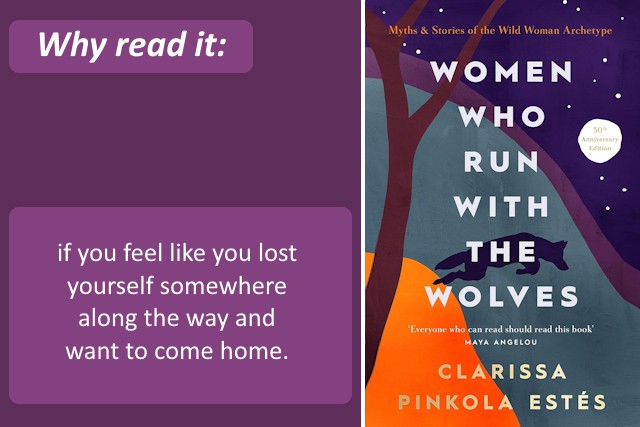
The wildest — and most healing — book on this list. Estés, a Jungian psychoanalyst, explains that inside every woman lives the Wild Woman: intuitive, fierce, wise, knowing when to growl and when to stay silent. Civilization, however, almost always cages her, tames her, and forces her to be sweet and convenient.
This book is a long, warm, sometimes tough conversation with that inner wolf. After reading it, many women begin to: trust their intuition, stop apologizing for their emotions, cry without shame, feel anger without guilt, choose themselves even when others don’t like it. Many say, “It feels like I finally came back to my real self.”
Margaret Atwood — The Handmaid’s Tale (1985)
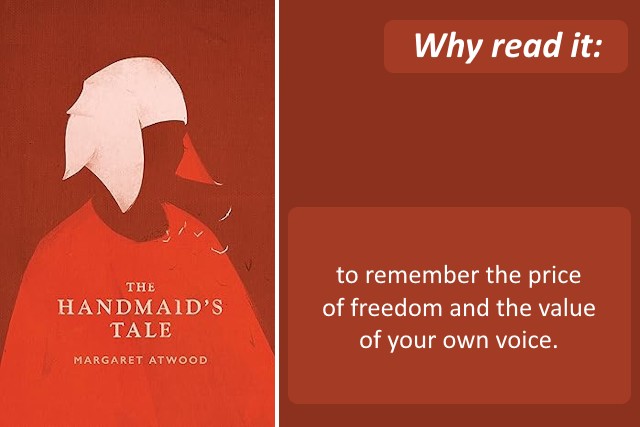
Yes, it’s a dystopia. Yes, it’s terrifying. And that’s exactly why it reshapes your thinking so powerfully. Atwood depicts a world where women are stripped of everything: the right to vote, to read, to choose, to own their own bodies. And the most chilling part? This world is built gradually, under slogans of “protection,” “tradition,” and “morality.”
After The Handmaid’s Tale, you start seeing any attempt to control women’s bodies, choices, or freedoms differently. Even the smallest “it’s for your own good” sends a chill down your spine. Many women become noticeably more attentive to politics, laws, and who is trying to decide things for them — and how.
These five books are not light reading for a relaxed evening. They’re often uncomfortable and sometimes painful. But almost every woman who has read them later says the same thing: “Damn. I had no idea life could be different.”