
Hair is one of the most stunning natural accessories we have. The right haircut or style can highlight your beauty — or catch the attention of someone special. The secret? A great hairdresser, of course!
But did you know that the hair on your head could technically hold the weight of two elephants? Or that blondes usually have more strands of hair than anyone else? Or that some men are so lazy they just wash their hair with soap instead of shampoo? AdmiGram.com has gathered the most interesting and unexpected facts about hair — from quirky biology to Guinness World Records.
Your Hair: Myths and Little-Known Truths
© Tamas Pap / Unsplash
- Right now, about 93% of the hairs on your head are actively growing. The rest are nearing the end of their life cycle and will soon fall out.
- The average person has about 130,000 hairs on their head. Blondes tend to have the most (up to 140,000), while redheads have fewer (around 86,000).
- It’s completely normal to lose up to 100 hairs a day.
- Only 2% of people are natural blondes, and just 3% are natural redheads. Everyone else falls somewhere among brunettes, browns, and those who’ve gone completely bald.
- The human body contains around 5 million hair follicles — some active, some long retired.
- Rapunzel’s hair would weigh 2,750 kilograms (6,062 lbs), according to physics research from the University of Leicester. That’s the weight of 45 people — though nobody is sure exactly how long her mythical hair was.
- It takes 13 days for hair to turn gray due to extreme shock or stress.
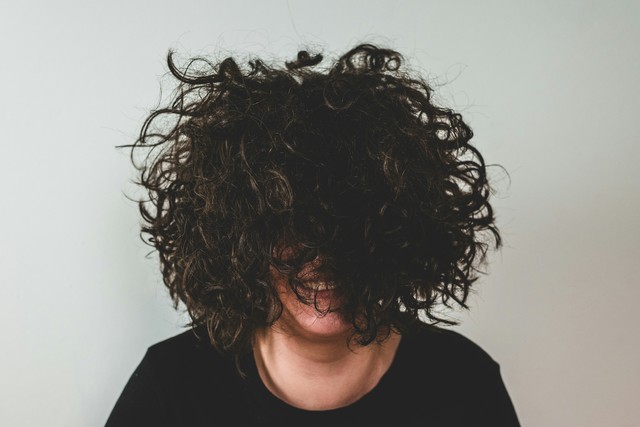
- Whether your hair is straight or curly depends on the shape of the follicle — the more curved it is, the curlier the strand.
- All hair shares the same structure but differs in protein levels and cuticle thickness, which creates straight, coarse, fine, or fluffy textures.
- Women are less prone to baldness than men because their hair roots are anchored 2 mm deeper into the scalp and are protected by different hormones.

© Luan de Oliveira Silva / Unsplash
- If a man never shaved in his life (assuming he lives 70 years), his beard would grow to about 9.1 meters (30 ft) long.
- Hair grows about 1 centimeter (half an inch) per month.
- Hair naturally absorbs oils from water — it’s a built-in sponge. Try adding a few drops of oil to your shampoo: it will soak into your strands and reduce dryness.
- An adult scalp produces about 35 grams of hair every day — roughly the weight of a chocolate bar.
- A single hair can support about 100 grams of weight, and a full head of hair could theoretically hold two African elephants (6 tons each!). Science is wild.
- Your eyelashes serve the same purpose as a cat’s whiskers — detecting movement, like an insect getting too close.
- Head lice do not come from dirt — they spread through shared brushes, hats, and close contact.
- During the Renaissance, Venetian women used horse urine to lighten their hair.
- One 1-inch strand of your hair can reveal a surprising amount: what you’ve eaten, where you live, and even whether you’ve experienced recent stress or trauma.
- Around 50% of men by age 30 show signs of hair loss.
- Renaissance women sometimes plucked their hairline to make their foreheads look higher — a beauty trend of the time.
- The Guinness World Record for the longest hair belongs to a man — Tran Van Hay from Vietnam, whose hair measured 6.8 meters (22 ft 4 in). The longest female hair? 5.6 meters (18 ft 5 in) — owned by Xie Qiuping from China.

© tengyart / Unsplash
- Scotland has the highest percentage of redheads in the world — around 13% of the population.
- In Victorian England — and later in Russia — people wore lockets made from a loved one’s hair as sentimental jewelry.
- In ancient Egypt, people shaved their heads to stay cool — and wore long black wigs for celebrations.
- Hair contains up to 14 different elements, including tiny traces of gold.
- Cutting your hair doesn’t make it grow faster.
- Haircare should always match your hair type: herbal rinses for oily roots (like chamomile or sage); natural oils for dry hair (like olive, flaxseed, or avocado).
- Beer masks are beneficial because beer is rich in plant proteins.
- Frequent washing does not cause hair loss or reduce volume.
- Contrary to myth, oils can help oily hair too — especially balancing oils.
- The best mask for oily hair uses a base oil like jojoba, grapeseed, almond, burdock, or sesame plus a few drops of essential oils such as eucalyptus, peppermint, cedarwood, pine, lemon balm, or cypress — pick the scent you love!
image on top: TRAVIS NESBITT / Unsplash