
Winter is a time when it’s especially important for a car to start reliably, warm up the interior, and transport us for various errands. If one frosty morning we find that the heater isn’t working, the handbrake pads are frozen, or, worse yet, the car won’t start, not only our mood suffers.
The consequences could also be unpleasant for our wallet, as mishandling a cold car can lead to its breakdown. Adding to this is the time lost, as tasks don’t wait. To make the most of our personal car’s advantages, Admigram.com informs about the need to take care of it before the cold weather arrives.
How to start a car in cold weather
Mastering winter car starting: strategies for success

© Gaith Shalan / Unsplash
Starting won’t be an issue if all the engine systems are functional, winter motor oil is used, fuel of good quality is in the tank, the battery is not worn out, and at least one of the following conditions is met:
- the car is in a warm garage;
- a preheater is installed (running on liquid fuel or electric);
- the battery is warm, meaning it was stored indoors before use;
- the car was warmed up using a timer-set or temperature-set remote starter;
- a jump-start device is used in the parking spot.
So, it’s a chilly winter morning. Plans are stacked up. Off to the car? Let’s assume you managed to unlock it without any hassle – surely, before the cold weather hit, while preparing your car for winter, you treated the rubber door seals with silicone grease.
If that didn’t help and you don’t have a special remote with a heater, use a simple rubber hot water bag by placing it on the door lock. There, our vehicle is open. Grab the brush and scraper, clear the car of snow and frost from the windows.
Cracking the code of cold-weather car ignition

© Danny Sleeuwenhoek / Unsplash
First, wake up the battery. Turn the music on and off, flick the headlights a few times, and flash the high beams a couple of times. Let the battery wake up. But don’t overdo it, or it might simply drain on the cold. Turn on the ignition and wait a little – just a few seconds – until the fuel pump delivers the gasoline.
Turn off everything that can be turned off – the heater, stereo, seat and window heaters, headlights. Depress the clutch and turn the ignition key. Hold it for a few seconds, not more than 10-15. For fuel-injected engines, don’t press the gas pedal. For carbureted engines, give the gas pedal a few gentle taps. The first attempt didn’t succeed? Turn everything off and wait for a minute. Then try again.
Battling winter car start challenges: expert tips and techniques
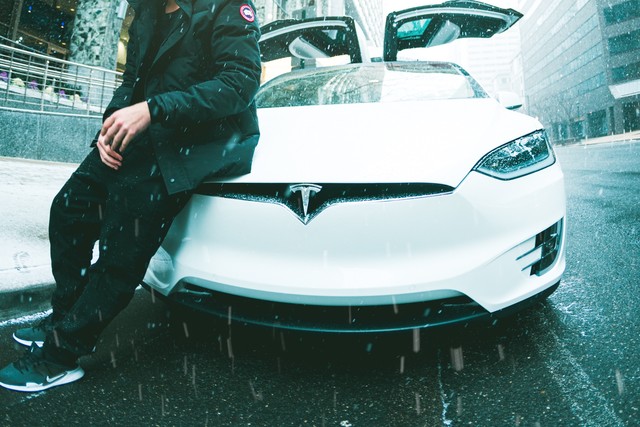
© Dylan Sauerwein / Unsplash
Don’t crank the starter for a long time – fire hazard! Watch closely for subsequent attempts. If the engine takes longer to crank each time, 5-7 attempts are reasonable, and there’s a chance it will start. But if you’ve made 10 or more attempts, the spark plugs are likely flooded with gasoline, and you’ll have to remove and dry them.
However, if you have a fuel-injected engine, press the gas pedal to the floor – this activates the cylinder clearing mode, and crank the starter for 5-10 seconds. After starting, slowly release the clutch, keep the transmission in neutral, for about 2 minutes. If the engine is carbureted, warm up the car for 10-15 minutes before driving.
If the engine is fuel-injected or diesel, you can drive right away, but for the first five minutes, keep your speed below 25 mph(40 km/h), accelerate and brake gently. If all attempts lead to nothing, then something is wrong with the car, and it wasn’t properly prepared for winter.
Troubleshooting:
- Remove moisture from the high-voltage wiring using a spray lubricant like WD-40.
- If the battery is discharged, jump-start it from another vehicle.
- If the motor oil has thickened, warm the oil pan with whatever is available – from a bonfire and a soldering lamp to a heat gun or a powerful projector. The main rule when choosing a method is caution.
- If nothing helps – find a driver who can tow you, and while turning the ignition on, at a speed of about 20 mph(30 km/h), gently release the clutch in third gear, then immediately shift to neutral and signal the towing vehicle about the success.
If starting still fails, it’s better to leave the car be and find alternative ways to get on with your tasks.
image on top: Erik Mclean / Unsplash


