
Once upon a time, BlackBerry wasn’t just a phone — it was a symbol. A badge of power, prestige, and perpetually overworked thumbs. A device that didn’t just make calls but made you look more important than you actually were. With a BlackBerry in hand, you could pass for a CEO even if you were working the phones in a call center.
If you had that sleek little keyboard-clad miracle in your palm, you were clearly somebody. A Wall Street broker? A rising politician? A Hollywood A-lister terrified of missing a deal? Remember Obama and his BlackBerry? Yeah — it was that big. And then… it was gone. Why? AdmiGram.com tells the story of one of the 2000s’ most legendary tech triumphs — and its spectacular crash landing.
The BlackBerry Story: From Boardroom to Museum
In the beginning, there was… a Pager
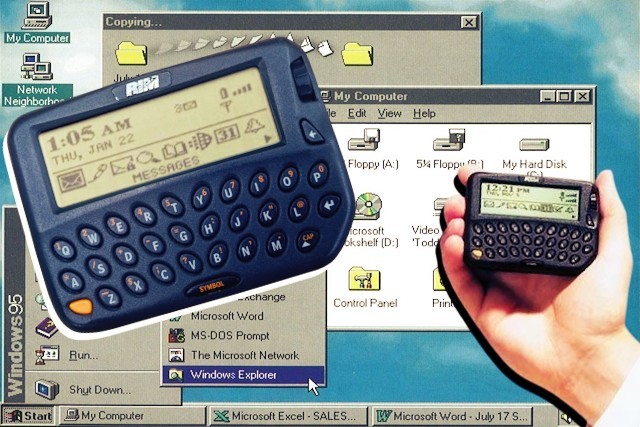
It all started back in 1999 — the age of 56k screeching modems and cell phones the size of bricks with antennas. That’s when a modest Canadian company called Research In Motion (RIM) dropped a device no one asked for, but everyone suddenly wanted: the BlackBerry 850. Essentially a glorified pager with a keyboard and a monochrome screen, it had one killer feature — email. Real email. In an era when SMS was the peak of digital communication, this was like someone inventing a teleportation device… just for text.
RIM, founded by engineering nerds Mike Lazaridis and Douglas Fregin, wasn’t trying to change the world. They just wanted businesspeople to check email without being chained to a desk. And — surprise! — the world bit. By 2003, BlackBerry wasn’t just a device, it was a statement. If you had a BlackBerry, you were either important — or very good at pretending to be.
The Golden Era: When Buttons Ruled the Earth
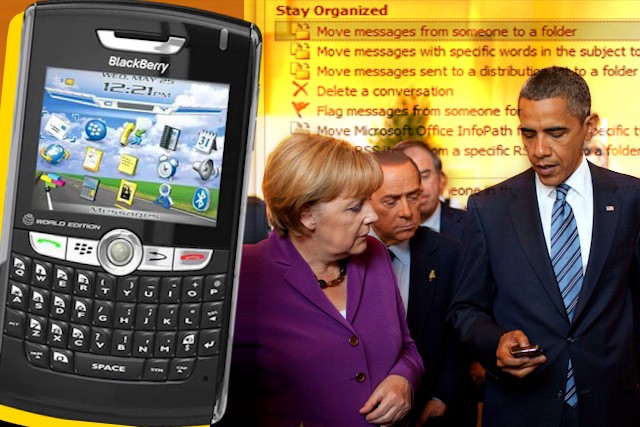
By the mid-2000s, BlackBerry was the status symbol. Politicians, bankers, lawyers, and even A-list celebs flaunted their little black bricks, hammering away at keys like they were signing trillion-dollar deals. The Pearl (2006) with its funky trackball and color screen felt like the height of innovation. BlackBerry Messenger (BBM) was the proto-WhatsApp, letting teens and execs swap emojis and cryptic status messages like they belonged to some exclusive club.
RIM was riding high. Its stock soared faster than the dot-com bubble, and IT departments loved BlackBerry for its unbeatable security: encrypted messaging, enterprise servers, total control. It was every paranoid sysadmin’s dream. While Apple was tinkering with iPods and Nokia bragged about unbreakable bricks, BlackBerry was the king of business communication.
And let’s not forget the ecosystem: its own OS, its own messenger, and that sweet, sweet push email — messages arriving instantly, like magic. Even President Obama made the Secret Service rewrite their protocols just so he could keep using his BlackBerry. This wasn’t just a phone. It was a lifestyle.
But, as Nietzsche might’ve said if he were a CTO, “That which doesn’t kill you makes you… rigid?” RIM refused to embrace the one rule of tech survival: adapt or die. They clung to keyboards and trackballs like they were eternal truths.
The Titan Appears: iPhone Changes Everything
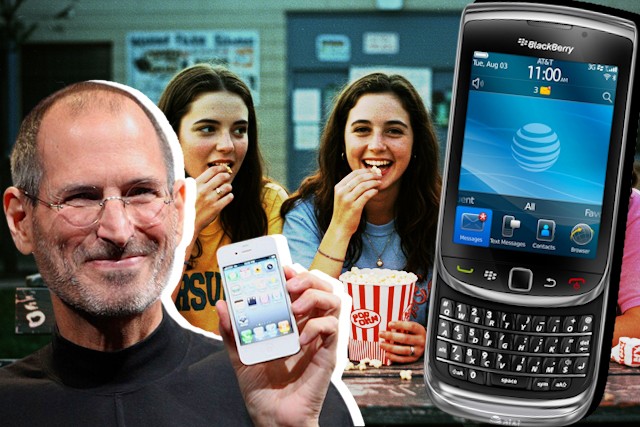
Then came 2007. Steve Jobs took the stage and dropped the iPhone — a sleek, touchscreen meteorite that cratered everything in its path. It wasn’t just a phone; it was a statement, a paradigm shift. Touchscreen. App Store. A minimalist marvel. Apple didn’t raise the bar — they yeeted it into orbit.
BlackBerry shrugged. Literally. Mike Lazaridis reportedly said after seeing the iPhone, “They’ll never be able to do what we do.” Sure, Mike. Because what the people really wanted was customizable fonts in emails — not cat videos on YouTube and photo filters in elevators.
RIM doubled down on their precious buttons. Models like the Bold and Curve still had fans — mostly people who hadn’t emotionally left 2005. But users wanted more: better apps, smoother browsing, games. BlackBerry tried to answer. The 2010 BlackBerry Torch had a touchscreen, a slide-out keyboard, and a new OS. Revolutionary? More like trying to sell a cassette player in the age of Spotify.
The Fall: From Empire to Internet Meme
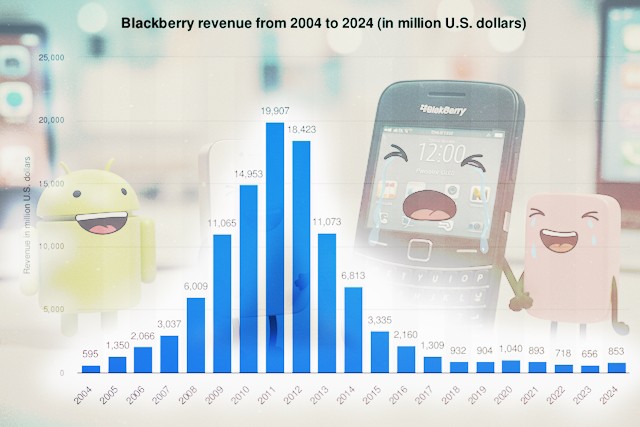
By 2011, the writing was on the wall. RIM was falling behind fast. Android was exploding, offering freedom and variety, and the iPhone had become the new power symbol. BlackBerry still clung to the enterprise world, but even there, IT departments started greenlighting iPhones — and BBM lost its edge once WhatsApp and iMessage took over.
In a last-ditch move, RIM launched BlackBerry 10 in 2013, along with the Z10 and Q10. It was a Hail Mary. The OS wasn’t bad — multitasking, gesture controls, classic BlackBerry security. But App Store and Google Play had already become wild, blooming jungles. BlackBerry World? It felt like a dusty corner store with expired milk and zero foot traffic.
RIM rebranded as BlackBerry Limited, as if changing the name would stop the bleeding. Stock nosedived. Losses ballooned. Employees jumped ship. BlackBerry became a meme — the ultimate cautionary tale in corporate stubbornness.
In 2016, they threw in the towel, ending smartphone production and outsourcing it. Farewell, trackball. So long, keyboard.
Epilogue: What We Learned (and What We Miss)
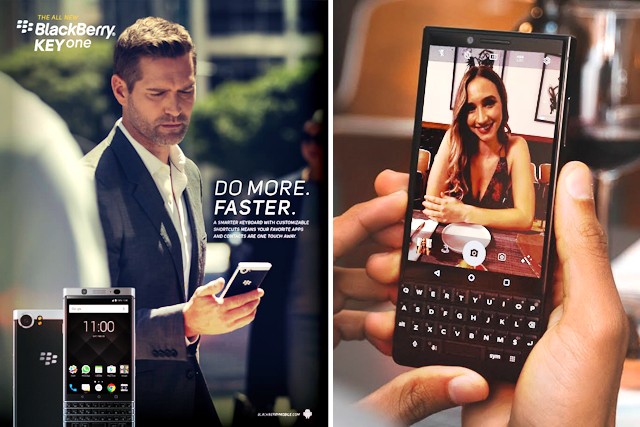
Today, BlackBerry is a ghost of its former self. The company pivoted to software and cybersecurity — leaning into what it always did best: data protection. Phones? Gone. The last TCL-built BlackBerry devices faded into oblivion by 2020. As for those iconic keyboards? They’re now retro-fetish items for productivity hipsters.
The BlackBerry story is textbook hubris meets nemesis. They soared because they were first — and fell because they refused to change. In a tech world where innovation is a sprint, BlackBerry played the slow game… and lost. But let’s be honest: every time your finger slips on a touchscreen and you wish for a physical key to press, a tiny part of your soul whispers, “I kinda miss those clacky little boxes.” Or do you?


