RC gadgets have fascinated guys since childhood. We used to dream of remote-controlled rovers, cars, and boats — but today, drones take everything to the next level.
If you lead an active lifestyle, a quadcopter is a must-have. AdmiGram.com highlights the top drones that stand out in design, ease of use, camera quality, durability, and flight time. Each one is perfect for capturing your adventures.
How to Choose a Quadcopter: Top 5 Drones
What is a Drone? A Bit of Essential Theory
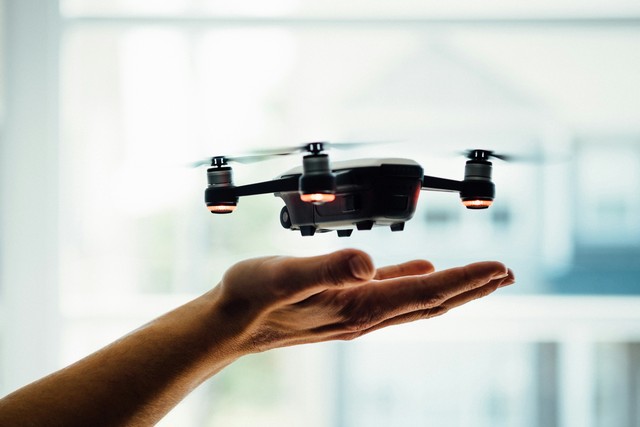
© Dose Media / Unsplash
Today, most unmanned aerial vehicles are quadcopters — drones with four propellers. They use four motors to generate lift and maneuver, powered by rechargeable batteries. They’re used for photo and video shooting, delivery, research, specialized tasks, and hobbies.
Control is managed via radio signals or software, with stabilization provided by gyroscopes and sensors. These four-propeller toys burst onto the remote-control model market recently, giving everyone a chance to feel like a pilot or see the world from above.
When choosing a quadcopter, consider:
- Purpose: Hobby, photo/video shooting, racing, or professional use.
- Camera: Resolution (4K, 1080p), stabilization (mechanical or electronic).
- Flight Time: Typically 20–30 minutes on a single battery.
- Flight Range: From 100 meters to 10 kilometers, depending on the model.
- Control: GPS, obstacle sensors, user-friendly interface.
- Size and Portability: Compact models are easier to transport.
- Budget: Varies based on features.
- Parts and Service: Availability of batteries, propellers, and repair support.
- Regulations: Flight restrictions in your area.
Choose a model that matches your needs and experience level.
DJI Mini 4 Pro
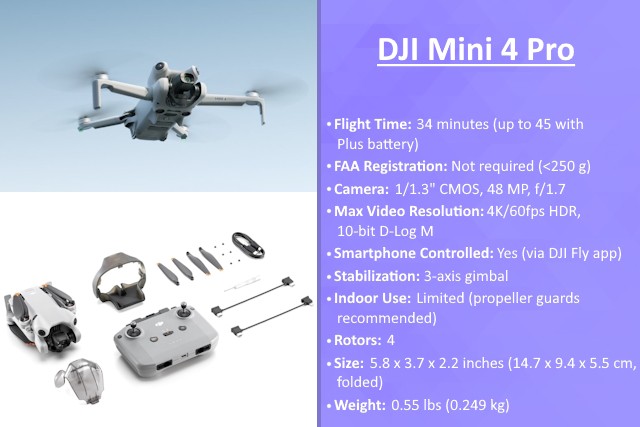
Overview: A compact, lightweight, and powerful drone with intuitive controls and an advanced camera. The 1/1.3-inch CMOS sensor captures 48 MP photos and 4K/60fps HDR video with 10-bit D-Log M for professional color grading. Perfect for travelers, vloggers, and aerial photography enthusiasts due to its portability and features like ActiveTrack and 360° obstacle avoidance.
Who It’s For: Ideal for beginners and advanced users shooting travel, landscapes, or dynamic scenes. Its compact design makes it easy to carry.
Reasons to Buy:
- Outstanding camera quality for its class.
- Lightweight, no FAA registration needed.
- Intuitive controls with advanced features (ActiveTrack, obstacle avoidance).
- Long flight time for a compact drone.
Reasons to Avoid:
- Limited wind resistance due to light weight.
- High price for the amateur segment.
DJI Air 3S
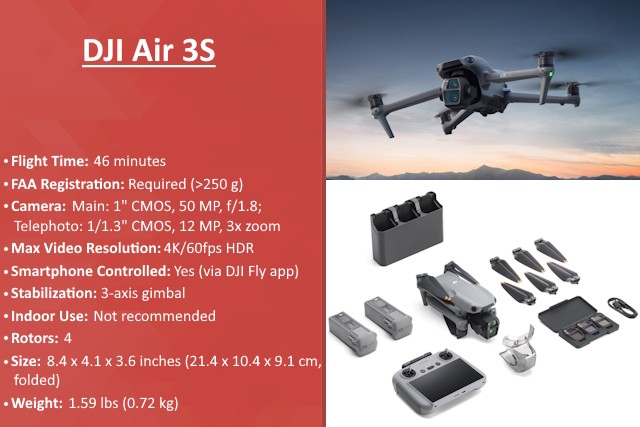
Overview: A versatile mid-range drone with dual cameras: a 1-inch CMOS main camera (50 MP, 4K/60fps HDR) and a 1/1.3″ CMOS telephoto camera (12 MP, 3x zoom). The main camera delivers high detail and excellent low-light performance. Easy controls and ActiveTrack make it ideal for shooting sports, nature, and professional videos. Its sturdy build boosts durability.
Who It’s For: Great for semi-professionals and enthusiasts shooting high-quality content, including dynamic scenes and distant subjects.
Reasons to Buy:
- Dual cameras for versatile shooting.
- Long flight time and durable build.
- Excellent stabilization and tracking features.
- High image quality in any condition.
Reasons to Avoid:
- Requires FAA registration.
- Heavier and less portable than Mini series.
DJI Avata 2
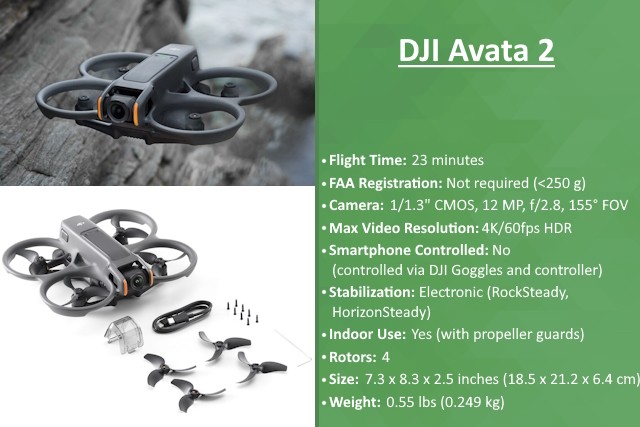
Overview: An FPV drone with cinematic video quality, featuring a 1/1.3″ CMOS camera (12 MP, 4K/60fps HDR). Its ultra-wide 155° field of view is perfect for dynamic FPV flights and trick shots. A sturdy frame with propeller guards enhances durability, and intuitive control via DJI Goggles 3 suits beginners.
Who It’s For: Ideal for FPV enthusiasts, content creators, and those shooting dynamic videos (racing, stunts, extreme sports).
Reasons to Buy:
- Immersive FPV experience with a quality camera.
- Durable and beginner-friendly.
- Suitable for indoor and outdoor flights.
- Unique wide-angle view for creative videos.
Reasons to Avoid:
- Short flight time.
- Requires additional accessories (goggles, controller).
Autel EVO Nano+
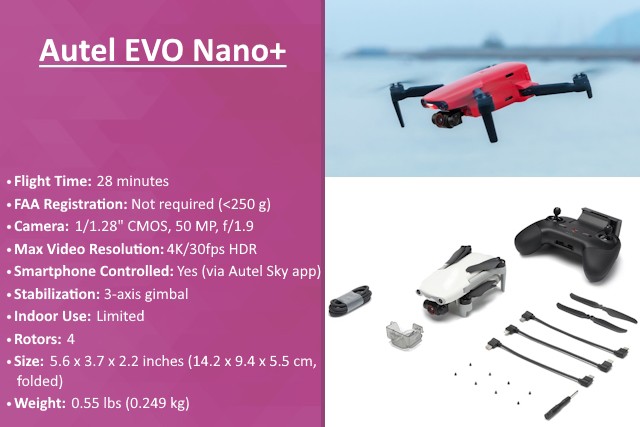
Overview: A compact DJI competitor with a 1/1.28″ CMOS camera (50 MP, 4K/30fps). Its adjustable aperture (f/1.9) and HDR support deliver vibrant colors and detail. Easy controls and auto-tracking features make it beginner-friendly, while a sturdy build ensures durability.
Who It’s For: Great for hobbyists and budding professionals seeking a DJI alternative for shooting landscapes, travel, and everyday content.
Reasons to Buy:
- High-quality camera with adjustable aperture.
- No FAA registration needed.
- Durable and easy to use.
- Solid DJI alternative.
Reasons to Avoid:
- Fewer smart features than DJI.
- Limited accessory support.
DJI Mavic 3 Classic
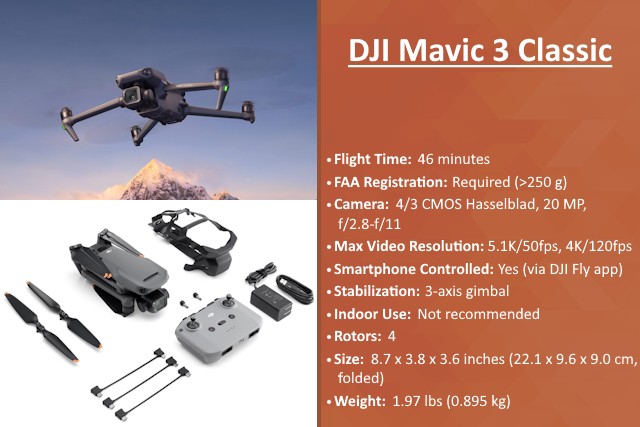
Overview: A professional drone with a Hasselblad camera (4/3 CMOS, 20 MP, 5.1K/50fps). Its adjustable aperture (f/2.8-f/11) delivers cinematic quality and flexibility in various lighting conditions. A robust build and long flight time make it reliable for demanding tasks. Easy controls suit both pros and enthusiasts.
Who It’s For: Perfect for professional photographers and videographers shooting films, commercials, or high-quality landscapes.
Reasons to Buy:
- Cinematic Hasselblad camera quality.
- Long flight time and reliable build.
- Advanced features (ActiveTrack, obstacle avoidance).
- Flexible camera for professional shooting.
Reasons to Avoid:
- High price.
- Requires FAA registration and more space to carry.
TL;DR:
- For beginners: DJI Mini 4 Pro or Autel EVO Nano+ — lightweight, great cameras, no FAA hassle.
- For more versatility: DJI Air 3S (dual-camera and rugged).
- For thrill seekers: DJI Avata 2 (FPV, home-friendly stunts).
- For pros: DJI Mavic 3 Classic (cinema-level video, long flight).
Pick the one that best fits your style and skill level — and get ready to elevate your adventures!
image on top: Driftime® / Unsplash