Christmas isn’t just about string lights, gifts, and “Jingle Bells” — it’s a full-on playground for scientists! From reindeer biology to the physics of antimatter, the holidays hide a treasure trove of discoveries that explain why we love this time of year so much.
AdmiGram.com breaks down 10 scientific facts about Christmas. These research-backed gems will help you impress your friends at Christmas dinner — or simply add a bit of magic and humor to your holiday season. Ready? Let’s go!
10 Fun Scientific Facts About Christmas
Rudolph’s Nose Glows Thanks to Bioluminescence
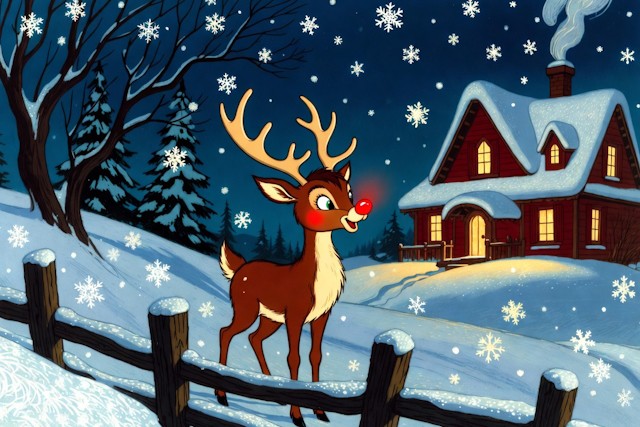
Rudolph’s famous red nose isn’t a myth — it’s an adaptation! Reindeer have about 25% more blood vessels in their noses, helping them regulate body temperature in Arctic cold, which also gives their noses that reddish tint. Some scientists even suggest that the glow could work like firefly bioluminescence — a chemical reaction that produces light without heat.
All of Santa’s Reindeer Are Female
Santa’s team has nine reindeer — and they’re all ladies! Male reindeer shed their antlers in winter, while females keep theirs until spring. It’s an evolutionary advantage: antlers help them survive the harsh season. So next time you sing “Rudolph the Red-Nosed Reindeer,” remember — that’s pure girl power pulling the sleigh!
Christmas Lights Were Invented by Thomas Edison in 1880
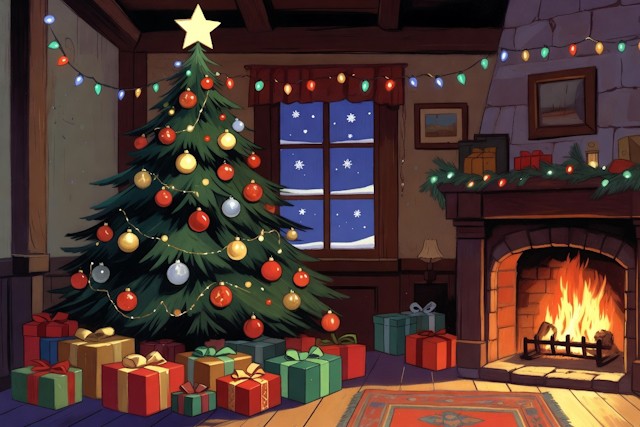
Before Edison, people decorated Christmas trees with real candles — a fire hazard waiting to happen! The famous inventor created electric holiday bulbs, making Christmas decorations brighter and safer. Fun science-history fact: a couple of bulbs changed the holidays forever.
You Can Blame Entropy for Tangled Christmas Lights
Why do your holiday lights end up in knots every single year? Thank the second law of thermodynamics — entropy! Physicists proved that cords longer than six feet naturally tangle because of molecular chaos. University of Bristol researchers simulated this and found: the neater you coil them, the faster they turn into a knotty mess. Quantum mechanics is trolling us.
Singing Christmas Carols Reduces Stress and Strengthens Connection
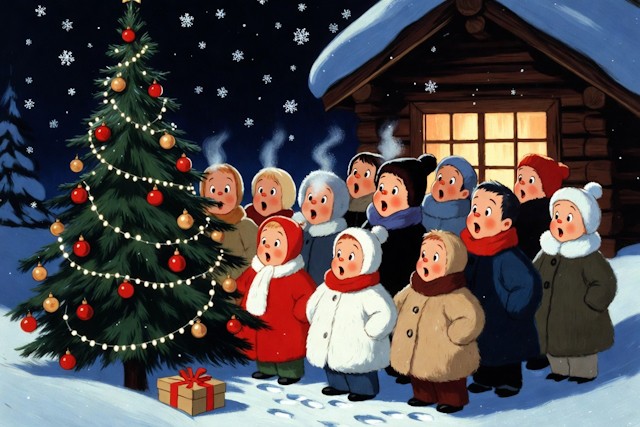
“Silent Night” isn’t just soothing — it’s therapy! Studies from the University of Michigan show that group caroling lowers cortisol (the stress hormone) and boosts oxytocin — the “hug hormone.” Participants reported feeling happier and more connected. Neuroscience confirms: Christmas literally sings to your brain.
Christmas Has Roots in Ancient Roman Saturnalia
The December 25 holiday evolved from the Roman festival of Saturnalia, celebrated December 17–23 in honor of the god Saturn. Historians trace today’s gifting, feasting, and costumes to these ancient traditions. Anthropology shows that Christmas is a cultural blend where Christianity “rewrote” pagan rituals to bring people together.
Giving Gifts Makes You Happier Than Receiving Them

It’s the economics of happiness! A study from the University of British Columbia found that people who spent money on others increased their happiness index by 20% more than those who didn’t give gifts — or only bought something for themselves. Dopamine, the joy hormone, spikes from generosity. Science says: Christmas is a built-in mood booster.
Your Brain Has a “Christmas Spirit Network”
MRI scans reveal that people who celebrate Christmas activate a special brain network — the sensorimotor cortex, premotor area, and parietal lobe — when they see trees or gifts. German researchers found that celebrators show a burst of activity similar to childhood nostalgia, while “neutral” participants feel sadness or indifference. Psychology says: the Christmas spirit is an evolutionary hack for social bonding.
Santa’s Sleigh Runs on Antimatter
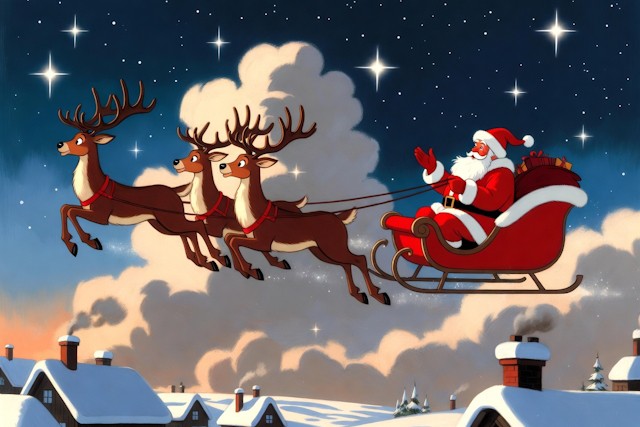
How does Santa travel the world in one night? Physicists from AUT University suggest antimatter! When antimatter meets matter, it releases enough energy to reach near-light speed. Add 31 hours (thanks to Earth’s rotation) and roughly 2 billion homes — that’s about five houses per second. And yes, Einstein’s relativity helps by slowing down Santa’s time mid-flight!
Christmas Trees Are Ancient “Cone-Bearers” Pollinated by the Wind
Conifers — literally “cone-bearers” — often have male and female cones on the same tree and rely on wind for pollination. Botanical studies from the University of Michigan show that this is an adaptation to harsh climates. Plus, the soft red cones of yews look like berries — nature trolling decorators since forever.